\"In October 2012, I was crossing the area between the Ugandan border post of Bunagana and the outskirts of Goma on a small motorbike, passing through Rutsuru and Rumangabo,\"
Fabien Blanc Originally published in 'Conflits' magazine
CONGO: THE ETERNAL RECURRENCE OF THE SAME
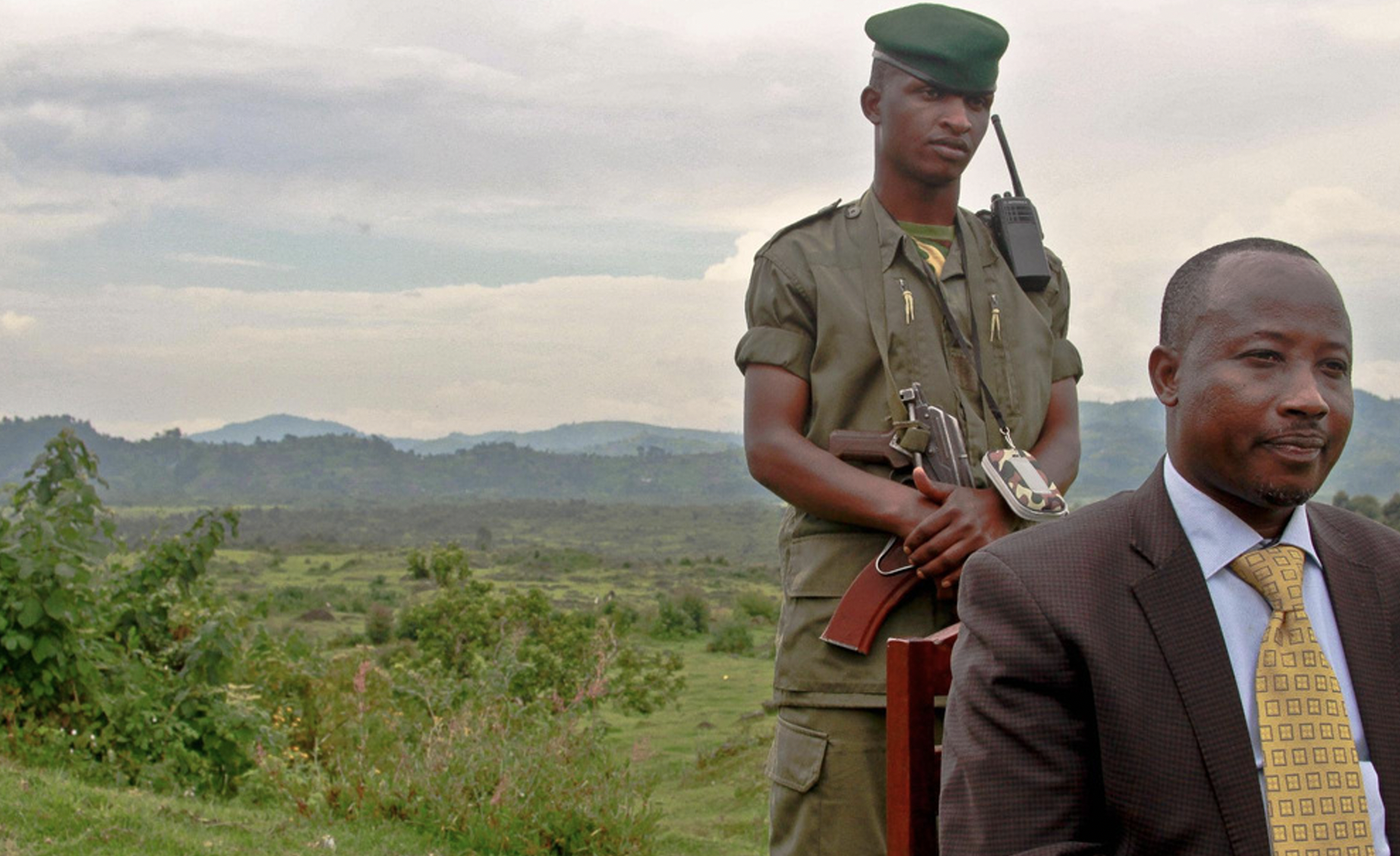
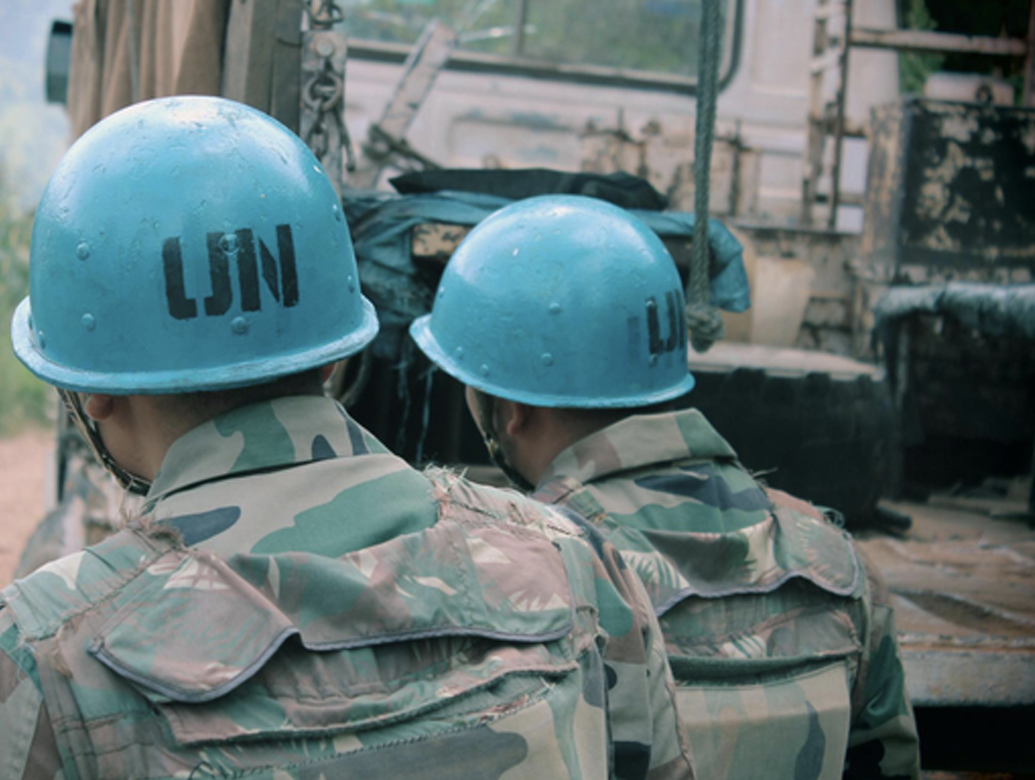
In October 2012, I was crossing the area between the Ugandan border post of Bunagana and the outskirts of Goma on a small motorbike, passing through Rutsuru and Rumangabo, a territory then held by the rebel movement known as the M23 (March 23 Movement). That was more than ten years ago, but unsurprisingly nothing has changed, because the same causes lead to the same effects. Rwanda's position on the border with North Kivu remains precarious because of the permanent security vacuum in the neighboring failed state. The economic stakes (mainly mining) continue to fan the flames of envy and finance the belligerents, while ever-increasing demographic pressure weighs on dwindling resources (erosion and climate change), and so on. In the background, the consequences of population displacements continue to heighten tensions, following the genocide of Rwandan Tutsis and the takeover of the country by the Rwandan Patriotic Front in July 1994. The question of identity remains fundamental, in the absence of a solution to previous episodes. In fact, the conflict resolution mechanism in the Democratic Republic of Congo is very much like a bonus for those who have the power to cause harm: people bargain to lay down their arms, only to take them up again a year later under a different name, with no post-conflict justice. As long as there is mistrust - Rwandan mistrust of the Congolese chaos as a refuge for forces hostile to this traumatized country, Congolese mistrust of a small neighbor ready to intervene when it deems it necessary - the cycle will be self-perpetuating. When the M23 took Goma in 2012, the events of the first Congo war seemed to be repeating themselves. When the M23 re-emerged at the end of 2021, no one had had time to forget the previous wars. Under international perfusion (like its neighbors), Rwanda benefits less than before from the sense of guilt of Western donors and the UN, which finally established Kigali's military support for the M23 (in an expert report leaked in August 2022). Although documented by the UN, which is generally cautious about taking a stance, Rwanda's support for the M23 was certainly not a revelation, but it did allow the EU and the United States to condemn it officially . however, what is the point of condemning if they have no means of coercion, apart from confirming once again to Africa as a whole the uselessness of the international community in dealing with crises? Jean-Marie Runiga (2012, Fabien Blanc) Rwanda had nevertheless tried to strengthen its collaboration with the DRC since Laurent-Désiré Kabila was replaced by Félix Tshisekedi in January 2019, hoping, without really believing, for a change in the country's leadership. Except that Tshisekedi can gesticulate as much as he likes, but the eastern provinces are still beyond the control of the state and its army, which is ill-disciplined and poorly supervised, and which has to live partially off the land when the troops are in the field, because the logistics do not follow. In contrast, the Rwandan Armed Forces (FAR) are well trained and well equipped... At headquarters in Addis Ababa, the fear of an open conflict between Congo and Rwanda took the members of the African Union (AU) by surprise. Since the capture of Bunagana by the M23, the peace and security Council of the Panafrican organisation has been characterized by a lack of follow-up to the negotiations. The various mediations undertaken by the AU and the East African Community (EAC) have thus far failed to calm the situation, again unsurprisingly. On the ground, the situation is even on the verge of turning into an inter-state conflict. Jean-Marie Runiga is suspected, with the support of Kigali (obviously not officially assumed), of supervising the training of new M23 fighters within Rwanda's borders, before they are sent to the DRC. What's more, the proven presence of elite Rwandan army troops alongside the M23 also lends an international dimension to a conflict that also involves several members of the EAC. MONUSCO soldiers (2012, Fabien Blanc) Much more visibly, on 24 January a Rwandan Armed Forces missile narrowly missed a FARDC Sukhoi-25[1]. Kinshasa immediately denounced an ‘act of war’ . but took no action in retaliation. Félix Tshisekedi also postponed indefinitely the launch of a real offensive against the M23, despite the failure to comply with what had been agreed in November at the Luanda summit, namely a withdrawal of the M23 from all their positions before 15 January. On the contrary, the troops of Sultani Makenga (the movement's military leader) have expanded their territory. The FARDC, already penalized by their lack of discipline, have failed to coordinate with either the EAC forces, which began deploying in the Kivus at the end of 2022, or those of Monusco. Playing the game of international diplomacy in the media, the M23 officially relinquished control of the Rumangabo military camp on 6 January (not without having summoned and waited for the cameras of the local and international media) . but only to the Kenyan contingent of the regional East African force, thus keeping the FARDC at bay, which clearly endorses the balance of power in favor of the M23. By acting in this way, the M23 above all gave the various players something to gnaw on: nobody was fooled, but everyone was able (momentarily) to pretend to save face. And, without fear of contradiction, the EAC even took the liberty of specifying that ‘it is important to know that the regional force has never concluded an agreement with the M23 and never will’. And when, barely three weeks later (on 26 January), the commune of Kitchanga (located on a major traffic route) came under M23 control, the slap in the face was difficult to hide, even with a lot of diplomatic doublespeak. As a result of the usual ineffectiveness of the so-called ‘peacekeeping’ troops, Congolese self-defense groups have already reorganized and are regularly engaged in violent fighting with the M23. In fine, Kagame has no problem declaring that ‘after spending tens of billions of dollars on peacekeeping over the past two decades, the situation in eastern Congo is worse than ever. To explain this failure, some in the international community blame Rwanda, even though they know full well that the real responsibility lies primarily with the DRC government, and with those external actors who refuse to deal with the root causes of the problem’. The Rwandan head of state is thus calling everyone to account, and the pseudo-international community to task. No one can be seen to contradict him, and with good reason. Unfortunately, the conclusion can be taken from an article published in this magazine two years ago (1): stabilisation of the Great Lakes will not be effective until the structural problems are addressed. At the risk of belaboring the point, the first of these is economic and demographic saturation, particularly in Rwanda and the two Kivus, overpopulated and with essentially agricultural economies, which is exploited by political-economic-warrior identity entrepreneurs. Kagame obviously prefers to control one of these belligerents, i.e. to have his hands on the M23, and the movement serves as a defensive first line of defence (the best defence being an attack). For him, this is the least bad solution to the danger posed by the Congolese chaos on his doorstep.
SOURCES
[1] Read “Is Africa’s Great Lakes region balkanized ?” by Fabien Blanc (published in Conflits magazine in 2021, available on the Fondemos’ website)
Support Fondemos
Every donation helps us continue producing independent analysis.