
Toolbox
Anatomy of Protest
Deconstructing civic mobilisations to understand how movements are born, resist, and transform societies.
 June 2026
 Manifesto as an act of resistance
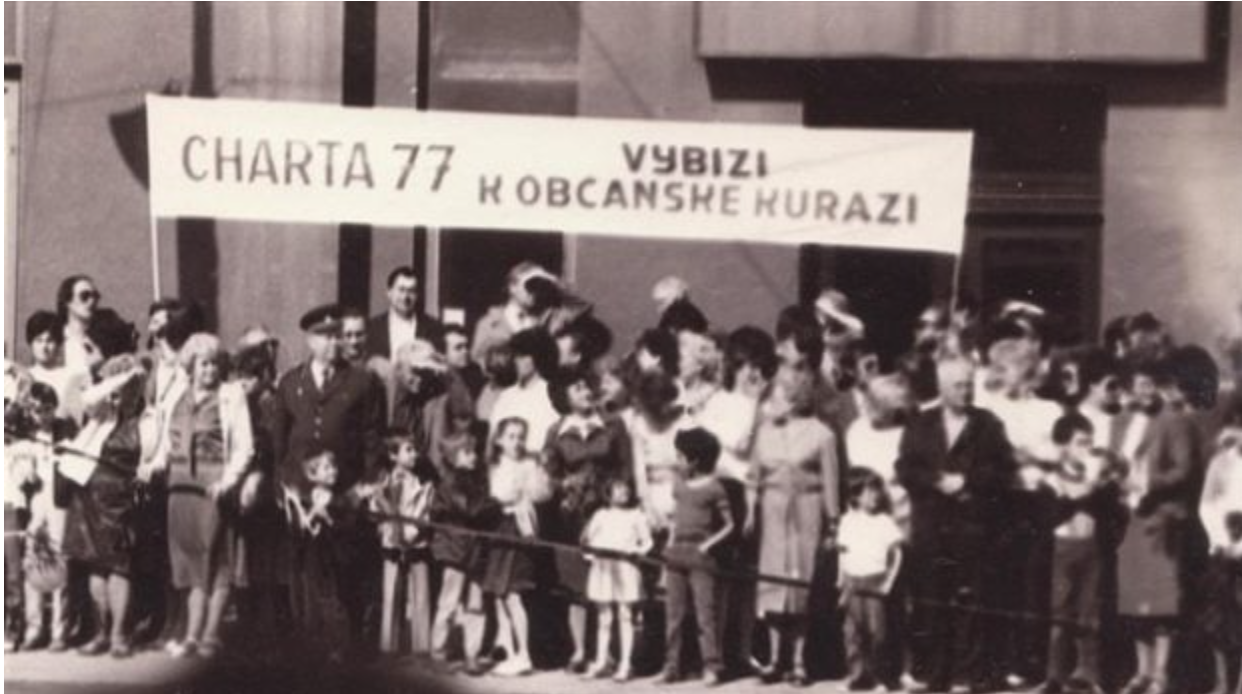
What happens when dissidents weaponise the state's own promises against it? From Charter 77 in Czechoslovakia (1977) to contemporary human rights petitions: manifestos create a permanent written record that forces public confrontation. Yet manifestos may face severe repression, remain limited to literate circles, and alone cannot topple regimes without external pressure. The manifesto's strength lies not in immediate victory, but in delegitimising power notably through its own contradictions.
Read the analysis → April 2026
 OCCUPYING PUBLIC SPACE: DURATION AS A FORM OF RESISTANCE
Occupation is a strategy built on time. By staying in a central space, movements create constant visibility and force authorities to respond. From Kyiv to Cairo, sustained occupations developed their own infrastructure, proving that resistance was organized, not momentary. Yet the method has limits. It requires resources, discipline, and a political path forward. Occupation may not always topple power but can still shape a generation and build long-term opposition.
Read the analysis → March 2026
 Rap as a tool for raising awareness, mobilizing young people, and generating public pressure
In 2011, amid a major social and political crisis in Senegal, a powerful expression of collective frustration emerged: Y’en a marre (enough is enough). The movement transformed public anger into civic action, mobilising youth, raising awareness and applying citizen pressure to defend democracy and demand accountable governance.
Read the analysis → January 2026
 Peaceful occupation of the means of production, strict discipline, and collective bargaining
A workers’ strike in the summer of 1980 in Poland helped set in motion a serious challenge to the Soviet empire. One dismissal lit the fuse and Solidarność took shape fast. Discipline, non-violence, and sharp coordination turned a local strike into a nationwide uprising, and one of the first major cracks in the Eastern Bloc.
Read the analysis → October 2025
 Sit-ins
Resistance was redefined and the sit-ins carefully planned. Students were trained by the Nashville Christian Leadership Council in nonviolence and followed a strict peaceful conduct code.
Read the analysis → September 2025
 The general strike
"The country of Guinea was largely shut down for three days, ending only after the government yielded to pressure."
Read the analysis → September 2025
 Non-violent march
"Under British colonial rule, India faced heavy taxation and a government monopoly on salt, a vital resource. In 1930, Gandhi launched a 350 km march to protest the salt monopoly, a symbolic act of civil disobedience."
Read the analysis → September 2025
 The bus boycott
"The Montgomery boycott endured through organized shared transport. 381 days of protest resulted in a legal victory with the end of bus segregation."
Read the analysis →