
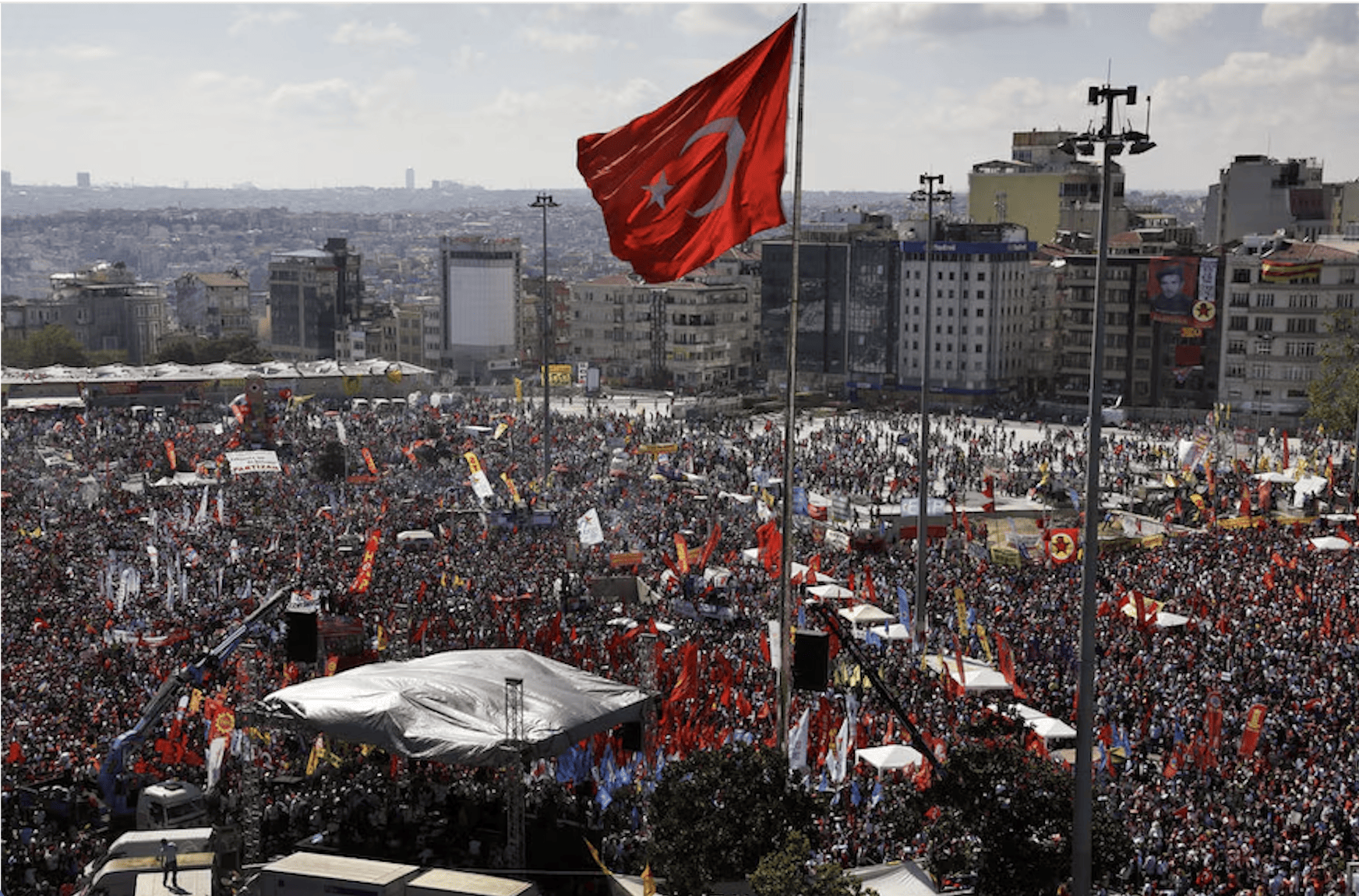
A Fondemos' Case Study
Key points
In 2013, Turkey had been governed for ten years by Erdoğan's Justice and Development Party (AKP), which was consolidating power, shrinking the space for opposition, and multiplying privatization projects in urban public spaces. It is in this context that a plan to demolish a park in the heart of Istanbul lit the fuse. ****
The police crackdown on a sit-in of fifty people was a tipping point: the question was no longer what would be built at Taksim, but how the authorities were treating dissent. This shift triggered mass participation across the country.
The social base of the movement was predominantly young, urban, and educated, but its organizational coalition was much broader, bringing together trade unions, feminist associations, professional chambers, and opposition parties within a common platform.
The protesters outmaneuvered the regime on the narrative front: with traditional media silent, social networks filled the void, and the government lost control of the narrative at the very moment the mobilization reached its peak.
Gezi imposed a real political cost on Erdoğan: international exposure, a legitimacy crisis over civil liberties, a constrained and visible crisis management, without producing an institutional tipping point.
The decentralized structure of the movement was both its strength and its ceiling: it enabled rapid and inclusive mobilization, but deprived the movement of the durable organization needed to convert momentum into political transition.
Introduction
In Turkey, in the spring of 2013, political and social tensions crystallized around the growing centralization of public decision-making and the proliferation of projects to privatize urban public spaces. In Istanbul, the redevelopment plan for the Taksim area included the removal of Gezi Park , one of the few green spaces in the city center, to be replaced by a reconstruction of an Ottoman barracks along with commercial and cultural facilities. For urban planners, architects, and environmental activists, what was at stake was as much the project itself as the process imposed without consultation.
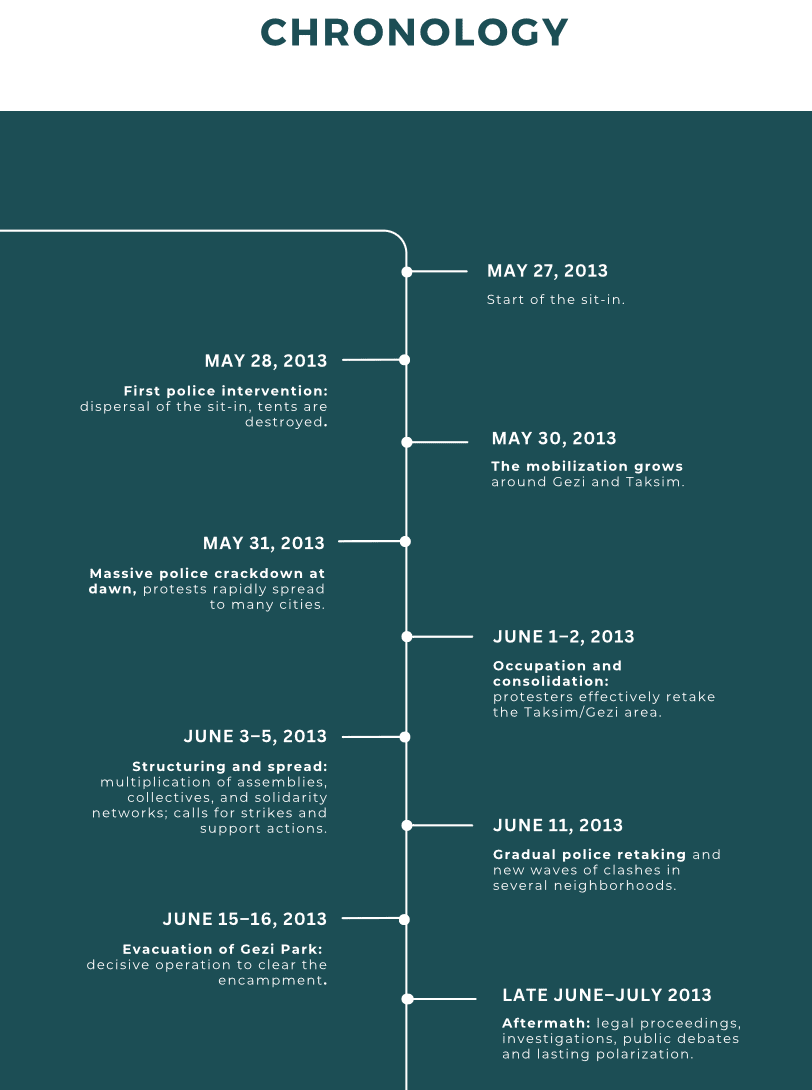
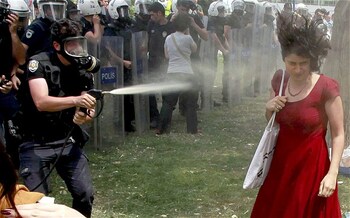
The trigger for the political crisis was not, however, the project itself, but the sequence of the first days: a sit-in was organized , then a violent police crackdown deemed disproportionate gave the movement new momentum. Amnesty International summarized this founding moment: police violence struck a nerve and a wave of protests spread across the country; the authorities' response was described as an "arbitrary denial of the right to peaceful assembly" (1), with repeated use of excessive force to disperse gatherings.
This case study examines the drivers of the success of the Gezi Park protests, particularly their capacity to mass-mobilize a movement, build a broad coalition, and impose a significant political cost. It aims to analyze the mechanisms by which Erdoğan's government was forced into a visible crisis management mode, experiencing a loss of narrative control and international exposure, without producing an institutional tipping point.
I. THE CONDITIONS FOR SUCCESS: MASS MOBILIZATION AND TACTICAL ROBUSTNESS
1. THE TIPPING POINT: REFRAMING THE CONFLICT THROUGH REPRESSION
In 2013, Recep Tayyip Erdoğan had already been in power as Prime Minister for 10 years. Gezi illustrated a particularly destabilizing mechanism for an authoritarian regime: the initial coercion, far from containing the focal point, reframed the event as a civic scandal and amplified participation. The International Foundation for Human Rights placed the starting point on May 27 , when around fifty people and journalists gathered in the park and were quickly dispersed by police violence clearly disproportionate to the situation (2). This moment transformed the initial object of civic contestation: the question was no longer solely what would be built at Taksim, but how power had treated dissent.
Human Rights Watch placed this shift in a broader context: under a government holding a strong majority, the Justice and Development Party (AKP in Turkish) was displaying a growing intolerance toward opposition, protest, and critical media (3). This contextualization was important: the event did not "create" dissent ex nihilo; it precipitated an already existing anger and made it publicly shareable.
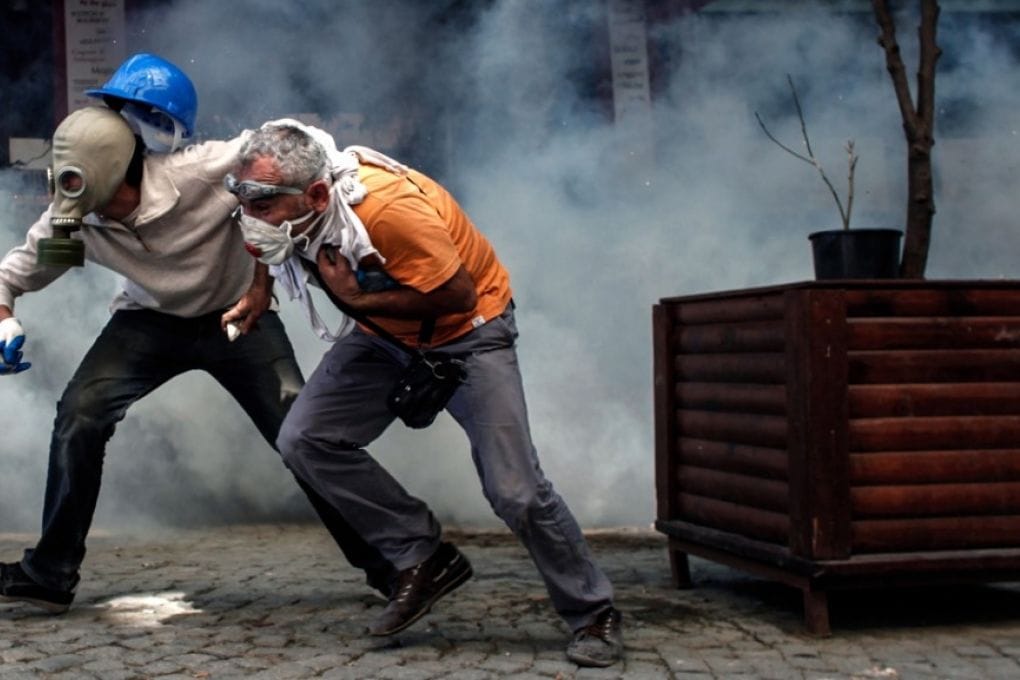
Two concrete consequences emerged. As is often the case, repression transformed passive witnesses into active participants. It encouraged more people to mobilize and gave engagement an immediate moral dimension as a struggle against injustice and abuses of power. Furthermore, it altered the rational calculus of individuals: many concluded that it was now riskier to stay home and let the abuses happen than to take to the streets, despite police violence. The mobilization then expanded very rapidly.
The spread of the movement to other cities confirmed a dynamic of diffusion. Several sources reported, based on relayed official figures, an extension to nearly all provinces and participation numbering in the millions (4). Despite divergent estimates between official and independent sources, the scale and national diffusion of the movement are not disputed. The protest became multi-site, making the strategy of police, media, and political containment more costly and less effective.
2. THE ARCHITECTURE OF MOBILIZATION: SOCIAL COALITION, OCCUPATION, COORDINATION AND INFORMATIONAL INFRASTRUCTURE
Gezi's success owed less to prior organization than to a mobilization architecture capable of simultaneously producing mass participation, cohesion, and resilience. Four components combined.
First,a broad and loosely affiliated social coalition. According to the KONDA survey conducted among 4,411 people (June 6–7, 2013), 79% stated they did not belong to any organization and 93.6% indicated they were present as individuals (5). The average age of participants was 28. However, the sociology of participants reveals an overrepresentation of young, educated urban dwellers and educated middle classes. The coalition, though pluralist, was not fully representative of all of Turkish society. The participation structure was overwhelmingly "civic" rather than activist in the classical sense. Taksim Solidarity brought together associations, foundations, networks, and political parties of widely varying kinds: the Confederation of Revolutionary Workers' Unions (DİSK), the LGBTI+ solidarity association Lambdaistanbul, the feminist NGO Women for Women's Human Rights, Greenpeace Turkey, the main opposition party (CHP), the Armenian movement Nor Zartonk, and the retirees and elderly movement (6).
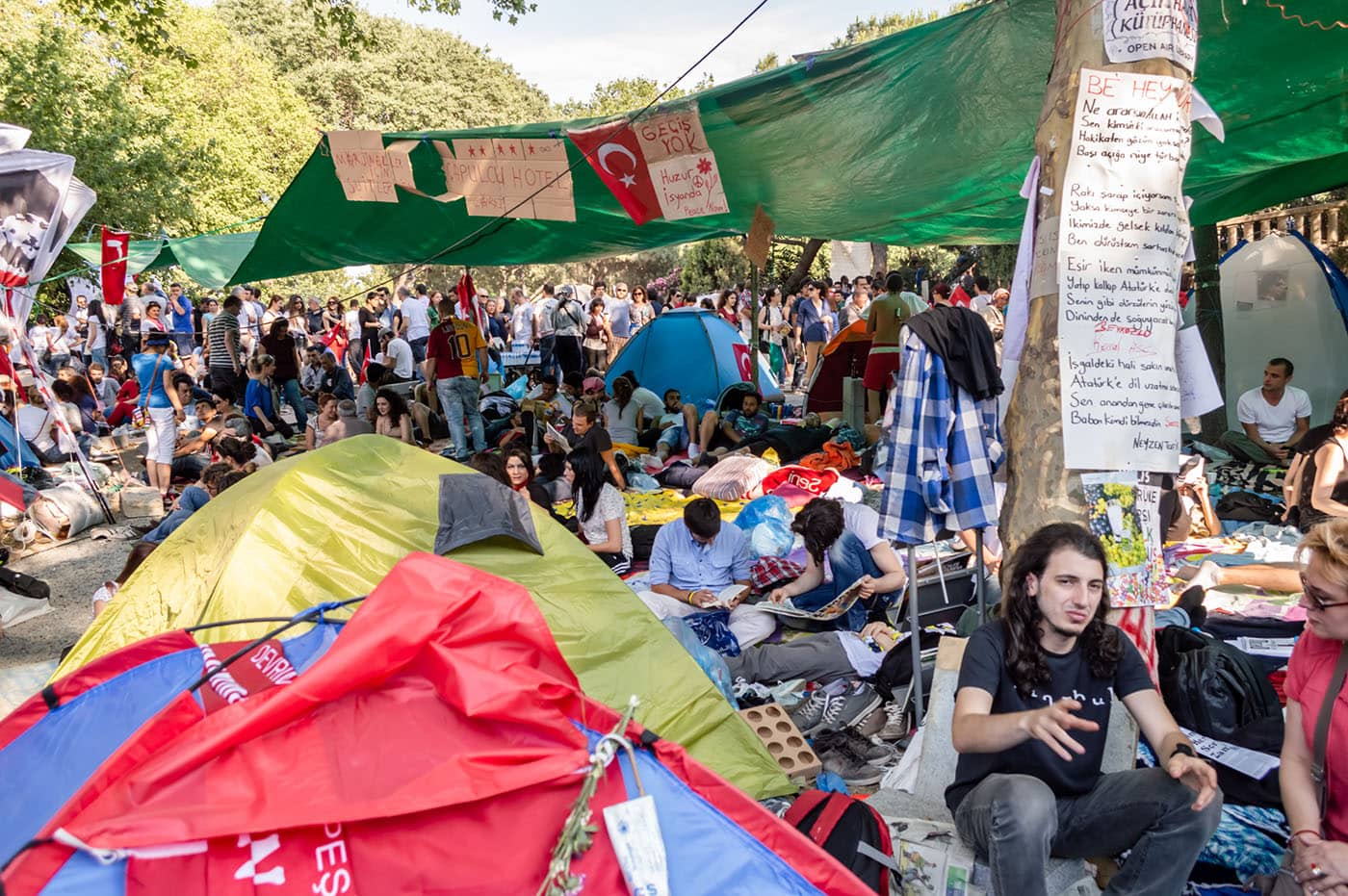

Taksim Solidarity brought together 117 different constituents, including several trade union confederations. (9) Trade union rallying occurred in two stages: some unions, such as DİSK, were founding members of the platform; others actively joined the protest during the first days of June. KESK, the confederation of public sector unions, moved up and broadened a previously planned strike to coincide with the protests, incorporating the democratic demands of the protesters. On June 16, five major organizations (DİSK, KESK, TMMOB, TTB, and TDB) called for a general strike against the repression. This rallying broadened the visible social base of the movement beyond educated urban youth, even as the unions were careful not to claim leadership, as this highly independent movement refused to allow them to play a directive role.
Social networks served as a central space for mobilization. They did not merely communicate: they organized, documented, and synchronized events. For example, a campaign calling to "turn off the television" (#BugunTelevizyonlariKapat) (10) was taken up in more than 50,000 tweets, to protest against the lack of coverage by traditional media.
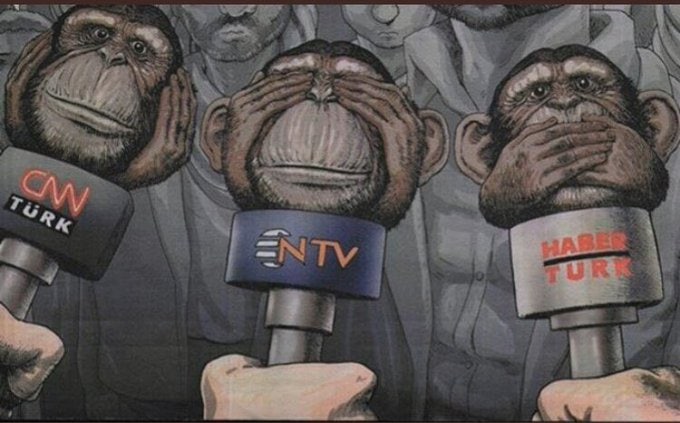
Humor constituted a genre in its own right within this digital mobilization. The penguin, the symbol of the nature documentary broadcast by CNN Türk during the events, became the satirical emblem of media censorship: activists and internet users circulated penguin cartoons, including one depicting a penguin on a melting iceberg watching Istanbul engulfed in tear gas on CNN International, while a Turkish viewer at home watched penguins on CNN Türk, each unaware of their own impending end. When Erdoğan called the protesters çapulcu ("marauders") , they immediately reclaimed the insult as a badge of honor, describing their actions of peaceful, humorous civil disobedience with the neologism chapulling, which was picked up even by the international press. Slogans abounded in pop culture references: "Tayyip - Winter is Coming" (a reference to Game of Thrones), or "You're messing with the generation that beats cops in GTA". This online mobilization of humor served a dual function: cementing a heterogeneous collective identity and symbolically eroding the authority of power at low cost, in a hostile media environment.
II. WHY POWER WAVERS: LEGITIMACY CRISIS, LOSS OF NARRATIVE CONTROL, RISING COSTS AND RECONSOLIDATION
1. THE DESTABILIZATION MECHANISMS: LEGITIMACY, NARRATIVE SOVEREIGNTY AND POLITICAL COSTS
The wavering of power first appeared as a legitimacy crisis. When the object of the conflict became the right to protest and the proportionality of force used, the executive was compelled to justify its conduct on a normative register, that of civil liberties, rather than merely that of order. Amnesty International noted that, over several months, the police repeatedly (11) used excessive force to prevent and disperse peaceful demonstrations. The FIDH observed that a year later, the battle had partly shifted to the courts (12): peaceful protesters were prosecuted, while victims of police violence struggled to obtain justice. This legal asymmetry undermined confidence in the rule of law and fueled diffuse delegitimization.
The second mechanism concernednarrative control. In the case of Gezi Park, protesters were outraged to see that at the height of the mobilization, CNN Türk was broadcasting a nature documentary about penguins instead of covering the protests (13). The visibility of the moment was thus not provided by traditional media, temporarily depriving the state of its monopoly on public facts: when information was not provided by traditional media, social networks filled those blind spots. In such an environment, the strategy of concealing the scale of the mobilization became less effective.
2. WHY THERE WAS NO INSTITUTIONAL TIPPING POINT: INTERNAL LIMITS, RECAPTURE OF CONTROL AND ADAPTABILITY OF COERCION
Gezi's power was first and foremost that of a moment of social cohesion: rapid mass mobilization, a broad social coalition, the creation of a "commons" (14) around a place, and narrative superiority. But converting a moment into an institutional tipping point would have required lasting relays, organization, possibly leadership, alliances, and a long-term strategy. The weakly structured and largely individualized character of participation fostered strong initial inclusivity, but also limited the emergence of recognized leadership or a stabilized programmatic platform. However, some scholars emphasize that this horizontality was also a strategic choice aimed at avoiding partisan co-optation and targeted repression. The absence of institutional translation cannot therefore be attributed solely to organizational deficits, but must be analyzed in interaction with the political context and available institutional opportunities.
The state, for its part, held a comparative advantage over****time : it was able to reclaim space, impose individual costs, and shift the conflict to the judicial and administrative arena. Human Rights Watch documented prosecutions of hundreds of people, detentions and use of heavy charges, as well as pressure on critical media. The FIDH described a "legal saga" in which peaceful protesters faced severe penalties, while proceedings against perpetrators of police violence were rare and slow (15).
One could thus observe genuine learning by the coercive apparatus: first, the identification of the movement's support points, then the neutralization of these points through legal and administrative instruments, by their very nature functions of the state's monopoly. In the wake of Gezi, measures were seen against the independence of the judiciary, the expansion of executive control over the internet, and the criminalization of unauthorized emergency medical care. In other words, the state did not merely disperse a gathering; it sought, over time, to reduce civil society's future capacity to produce robust occupations and to give voice to contestation. Other analyses, however, invite us to place these transformations in a longer trajectory of executive centralization already underway before Gezi. Gezi should therefore be considered less as an exclusive origin than as a possible accelerator of pre-existing tendencies. 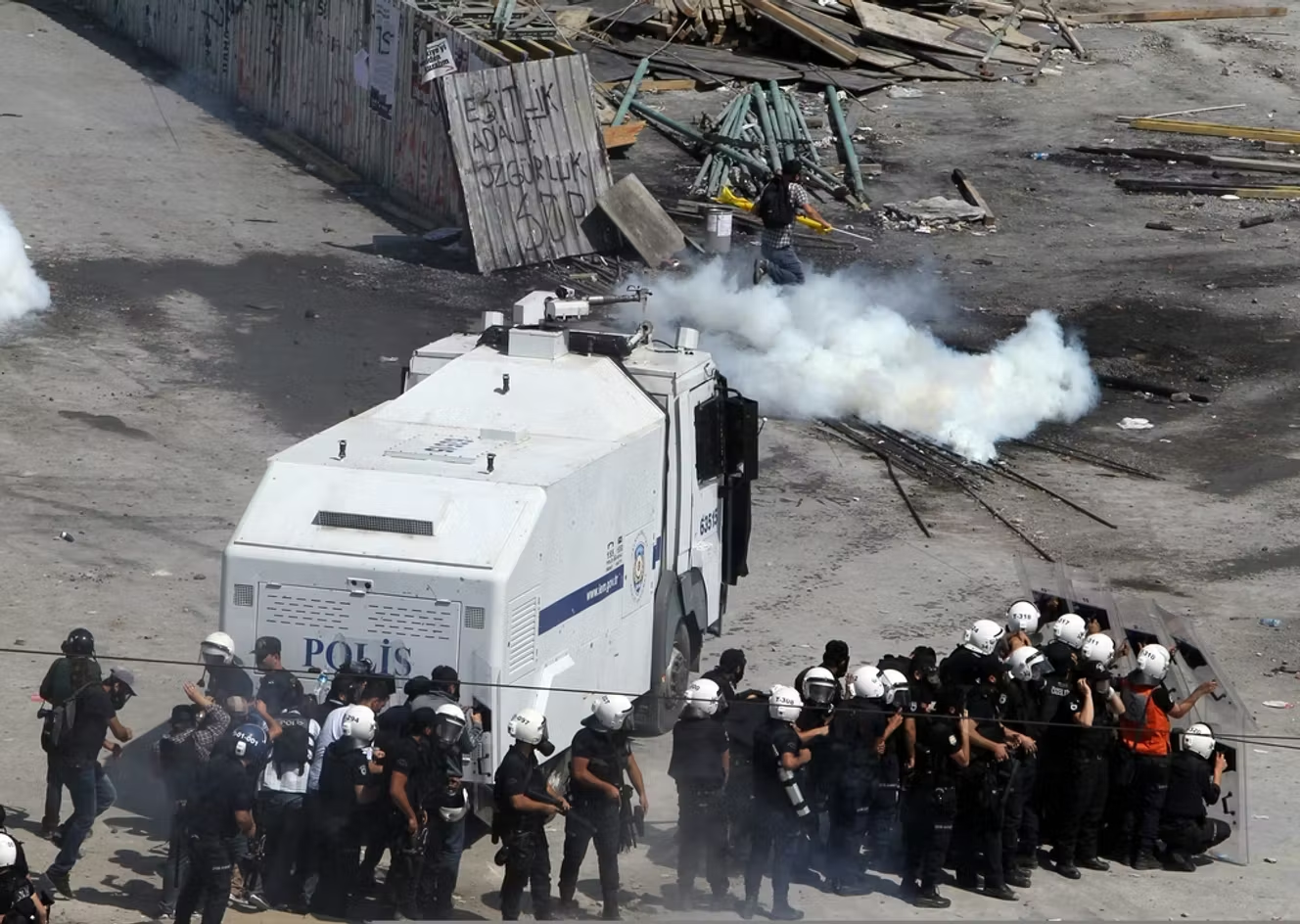
III. CONCLUSION
On one hand, Gezi demonstrated that a heterogeneous coalition could form in a very short time, aggregate multiple causes and publics, and produce a contestatory arena with a strong capacity for diffusion. On the other, this eruption contributed to a durable reconfiguration of the political and institutional environment toward a tightening of the rules of political engagement, an intensification of control mechanisms, and a reduction of the space for contestation.
Ultimately, Gezi's legacy lies less in immediate institutional transformations than in the constitution of a repertoire of action and a protest memory that can be mobilized subsequently: a grammar of occupation and symbolic non-violence, notably through intensive use of humor, mockery, and powerful imagery, contributing to the struggle for freedom.
IV. OPERATIONAL LESSONS
- Occupation of a symbolic site
Protesters occupied a highly symbolic space to make the conflict immediately legible. They focused media and public attention while establishing daily logistics (continuous presence, improvised services, mutual aid and care).
- High-visibility non-violent actions
Collectives prioritized highly visible peaceful actions that produced morally asymmetric images. In this way, any repression appeared disproportionate and became politically costly for the authorities.
- Humor, satire and memes
Participants used humor and satire to unite heterogeneous publics. They defused fear, reclaimed stigmas, and stabilized a collective identity by making mobilization more inclusive and memorable.
- Coordination platforms
Platforms like Taksim Solidarity structured the mobilization by formulating common demands. They organized spokespersons, reduced fragmentation between groups, and framed the relationship to the authorities, whether for dialogue or for refusing dialogue in a coherent manner.
- Real-time information
Activist networks continuously disseminated information to alert and coordinate actions. They documented events, bypassed media deemed silent, and archived usable evidence for later use (testimonies, images, timelines).
- Technical resilience (Wi-Fi, redundancy)
Organizers set up technical solutions to maintain information flows despite disruptions. They pooled local infrastructure (Wi-Fi hotspots, batteries, relays) and prepared alternative channels in case of outages.
- Forums and diffusion
The mobilization extended beyond the central site when forums were created in neighborhoods. Participants thus transformed the occupation into a constellation of local deliberations, which maintained the activist fabric even after the main site was retaken.
- Trade union and professional support
SOURCES
- (1) Amnesty International, Turkey: Gezi Park protests: Brutal denial of the right to peaceful assembly in Turkey(2013)
- (2) Amnesty International (EU Office), Adding injustice to injury: One year on from the Gezi Park protests in Turkey(2014)
- (3) International Federation for Human Rights (FIDH), Gezi, One year on: Hunting the protestors down (May 27, 2014)
- (4) Human Rights Watch,The Turkish Protests – Still Standing (June 21, 2013)
- (5) Human Rights Watch, Turkey: Baseless Charges Over Landmark 2013 Protests (March 25, 2019)
- (6) KONDA Research & Consultancy, Gezi Park Survey: Who are they, why are they there and what do they demand? (2013)
- (7) İnsan Hakları Derneği (İHD), Report on incidents during the Gezi Park Resistance (27 May 2013 – 10 July 2013) (2013)
- (8) Hürriyet Daily News, Protesters are young, libertarian and furious at Turkish PM, says surve y (June 6, 2013)
- (9) Ethical Journalism Network, Censorship in the Park – Gezi: A Picture of Self-censorship (n.d.)
- (10) Foreign Policy,The might of the pen(guin) in Turkey’s protests(June 10, 2013)
- (11) X (Twitter), Hashtag #BugunTelevizyonlariKapat(2013)
- (12) YouTube (CNN), CNN mocked CNN Türk for showing a penguins documentary during Turkish protests(n.d.)
Support Fondemos
Every donation helps us continue producing independent analysis.