
BACKGROUND
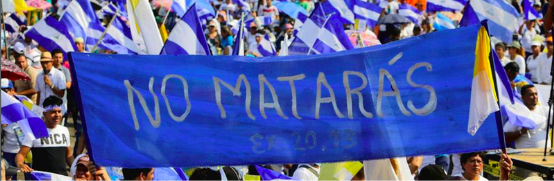
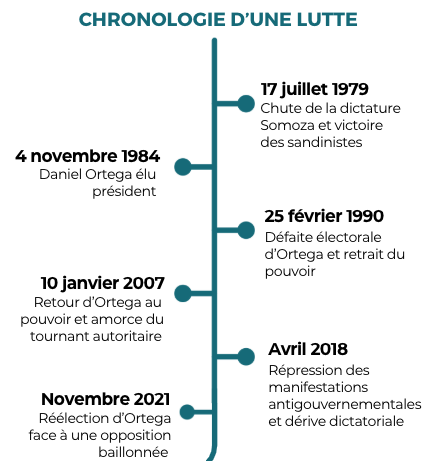
In 1979, the revolution led by the Sandinista National Liberation Front (FSLN) put an end to the Somoza dictatorship in Nicaragua. Daniel Ortega became president in 1985, then lost the 1990 elections. He returned to power in 2007, this time through the ballot box, but gradually began concentrating power in an authoritarian way by amending the Constitution and placing his allies at the head of key institutions. Starting in 2018, a wave of protests against pension reform was violently repressed, resulting in hundreds of deaths. Since then, Ortega’s regime has hardened: mass arrests of opponents, media control, rigged elections. Nicaragua is now considered a dictatorship, dominated by the Ortega-Murillo couple, with no freedom of expression or genuine political opposition. 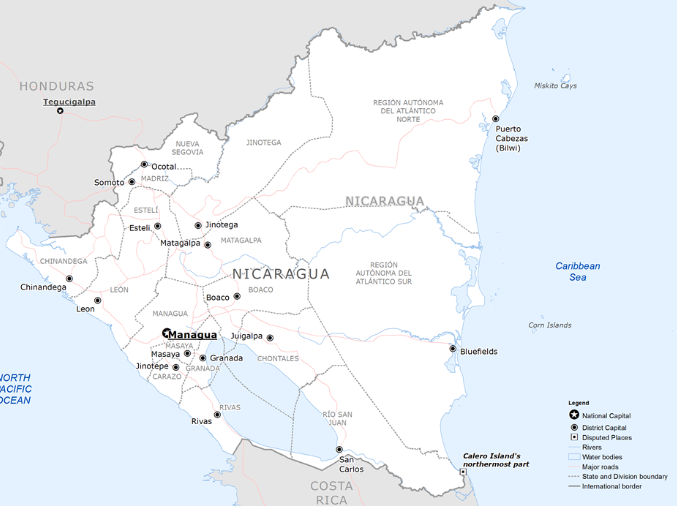
THE (SO FAR) FAILURE OF THE STRUGGLE FOR DEMOCRACY
This failure can be explained by a set of internal and external factors, combining violent repression, institutional control, social fatigue, and international disengagement. This deadlock is due to the following elements:
1. Relentless and systematic repression
The Ortega-Murillo regime has gradually dismantled all counter-powers and uses:
- The police, army, and militias to suppress any protest.
- Anti-terrorism laws to criminalize any criticism.
- Show trials to convict journalists, students, and activists.
- Revocation of nationality for dozens of opponents, creating a two-tier citizenship.
Result: the personal and family cost of resistance has become too high for many.
2. Total control of institutions
The judiciary, the electoral commission, public media, and the National Assembly are all controlled by the regime. The courts, despite constitutional provisions, granted Daniel Ortega the right to run for the 2011 presidential election. The modified Constitution validated this authorization retroactively in 2014
- Elections have become shams with no real opposition. In 2021, Ortega was re-elected with 75.9% of the vote, after arresting or barring all other candidates.
- Civic space has been eradicated: over 3,000 NGOs banned since 2018.
This is an authoritarian regime in its structure, locked down following the model of Venezuela or Belarus.
3. A fragmented and exiled opposition
- The political opposition has been decapitated: its main leaders are in prison or in exile.
- Coalitions (such as the Blue and White National Unity or the Civic Alliance) often lack strategic coherence.
- Civil society, even mobilized abroad, is not sufficiently connected to the population remaining in Nicaragua.
Resistance without sustainable local anchoring eventually runs out of steam.
4. A weary and resigned population
- Many have entered a survival mode: fleeing, staying silent, or adapting.
- There is a form of internalized fear, but also weariness, even disillusionment with political elites.
The democratic hope of 2018 has turned into a deep collective disappointment.
5. Growing disinterest from the international community
- The European Union, OAS (Organization of American States), and the United States have condemned the regime, but without any real coordinated strategy.
- Targeted sanctions (asset freezes, travel bans) imposed by the US and EU against Rosario Murillo and other regime dignitaries have had little effect.
- Nicaragua left the OAS, strengthened ties with Russia, China, and Iran, and repositioned itself with the "global authoritarian axis".
The lack of strong and coordinated pressure allows the regime to avoid international isolation.
6. A strategy of “authoritarian stability”
- Ortega capitalizes on a minimal social order (at the cost of public freedoms) and an economy on life support. China, in particular, has invested in infrastructure (roads, energy, technology), while informal flows, mainly remittances from the diaspora, account for about 15% of GDP.
- He plays the lesser evil card against the (real or perceived) chaos that a sudden change might bring.
- He maintains support from part of the economic elites and more conservative religious sectors.
This mix of authoritarianism, pragmatic alliances, and clientelism stifles the emergence of any credible political or social alternatives.
HOW TO ACT ON THESE FACTORS TO WEAKEN AUTHORITARIANISM?
To weaken authoritarianism in Nicaragua, denunciation is not enough: strategic and multisectoral action is needed. Every factor that fuels authoritarianism can become a lever for pressure and resistance, provided that internal mobilization, external support, and a long-term vision are combined. 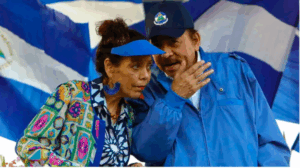
** 1. Bypass and expose repression**
Concrete actions:
- Document violations via NGOs and secure digital platforms (e.g.: SOS Nicaragua, Confidencial, La Prensa in exile).
- Train activists in cybersecurity and citizen journalism to bypass censorship.
- Amplify exiled voices through international media, podcasts, op-eds, etc.
- Create digital archives of repression: to build a memory for future justice.
Goal: Do not let silence settle. The shadow protects power, light weakens it.
** 2. Strengthen the democratic opposition, even in exile**
Concrete actions:
- Help structure a unified and credible opposition: common platform, shared strategy, pluralistic leadership.
- Support political education efforts within the diaspora.
- Create a government-in-exile (like Myanmar’s National Unity Government) to embody an alternative.
Goal: Offer a counter-narrative. A weak opposition feeds the illusion that “there is no alternative.”
3. Work with the population inside the country
Concrete actions:
- Discreetly support community networks (religious associations, cooperatives, women's movements, etc.).
- Launch civil disobedience campaigns, at first symbolic but highly visible.
- Encourage artistic forms of resistance (music, poetry, graffiti, etc.).
- Offer economic alternatives to state patronage (microcredit, support from abroad, etc.).
Goal: Keep a spark of local organization alive, without endangering citizens.
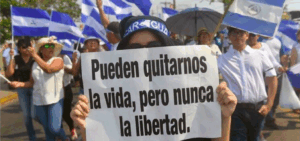
4. Activate international levers strategically
Concrete actions:
- Targeted and smart sanctions that avoid harming the population (asset freezes, travel bans).
- Active support to civil society and independent media (funding, training, secure hosting).
- Formal recognition of exiled opponents, refugee status, platforms in international institutions.
- Condition international investments and agreements on political gestures (release of prisoners, monitored elections, etc.).
Goals: to give the opposition credible external support, and to make the cost of repression outweigh its benefits.
5. Fight on the symbolic and narrative front
Concrete actions:
- Demystify regime discourse by offering simple, powerful, emotional counter-narratives.
- Create viral online campaigns that mobilize youth and outsmart propaganda.
- Give a human face to resistance: videos, portraits, testimonials.
- Educate about democracy through accessible formats: comics, TikTok videos, community theater, etc.
Goal: Make democracy exist in minds, before rebuilding it in reality.
6. Prepare for the post-Ortega era now
Concrete actions:
- Train future democratic leaders in the diaspora.
- Think about transitional justice: memory, reconciliation, trials?
- Plan institutional reconstruction: constitution, justice, media, military.
- Build bridges with moderate economic and religious elites who might switch sides.
Goal: Be ready to rebuild quickly if an opening emerges.
CONCLUSION
To sustainably weaken an authoritarian regime, it is essential to act on several fronts simultaneously. In the face of repression, documenting violations, cyberactivism, and international outreach can break the silence and mobilize external support. The fragmentation of the opposition, often exploited by regimes, can be overcome by unity around a common strategy, especially through action platforms in exile. To counter fear and fatigue, it is essential to strengthen discreet but effective forms of resistance, based on grassroots solidarity and social bonding.
Institutional control, in turn, can be challenged by external pressure and the development of alternatives, while the authoritarian narrative must be deconstructed through counter-narratives relayed by popular education and unifying symbols of resistance. Finally, to break the international isolation of oppressed peoples, targeted sanctions, political recognition of the opposition, and active citizen diplomacy play a major role. These combined levers strengthen a society’s ability to resist authoritarianism.
SOURCES
- Nicaragua: EU imposes sanctions on eight more individuals, 2/08/2021, Council of the EU
- Nicaragua on the Eve of Elections: False Democratic Windows?, 5/11/2021, Fondation Jean Jaurès, Jean-Jacques Kourliandsky
- Answers to Your Questions About Nicaragua and the Absolute Power of the Ortega-Murillo Presidential Couple, 25/01/2025
- “Nicaragua Under the Terror of the Ortega-Murillo Couple,” Journal des anthropologues , Delphine Lacombe
- Nicaragua (2018–2019). A Revolutionary Crisis , 2019, Gilles Bataillon, Problèmes d’Amérique latine
Support Fondemos
Every donation helps us continue producing independent analysis.