
A Fondemos' Case Study
Key points
In 2011, Tunisia combined entrenched corruption, regional inequality, and high youth unemployment within a closed political system, an explosive mix that produced broad, highly combustible social anger.
The uprising escalated faster than previous protest cycles, and repression intensified without restoring order, accelerating the regime’s loss of authority.
The police apparatus did not act as a single, unified bloc: senior leadership largely defended its privileges, while part of the rank and file showed fatigue, resentment, and at times outright disobedience.
The army’s stance clearly diverged from the police’s: its command avoided becoming the regime’s central instrument of repression, and that mattered at the decisive moment.
The regime’s fall was eased by this lack of unity within the coercive apparatus, a fracture that opposition forces could have exploited more deliberately.
I. CONTEXT
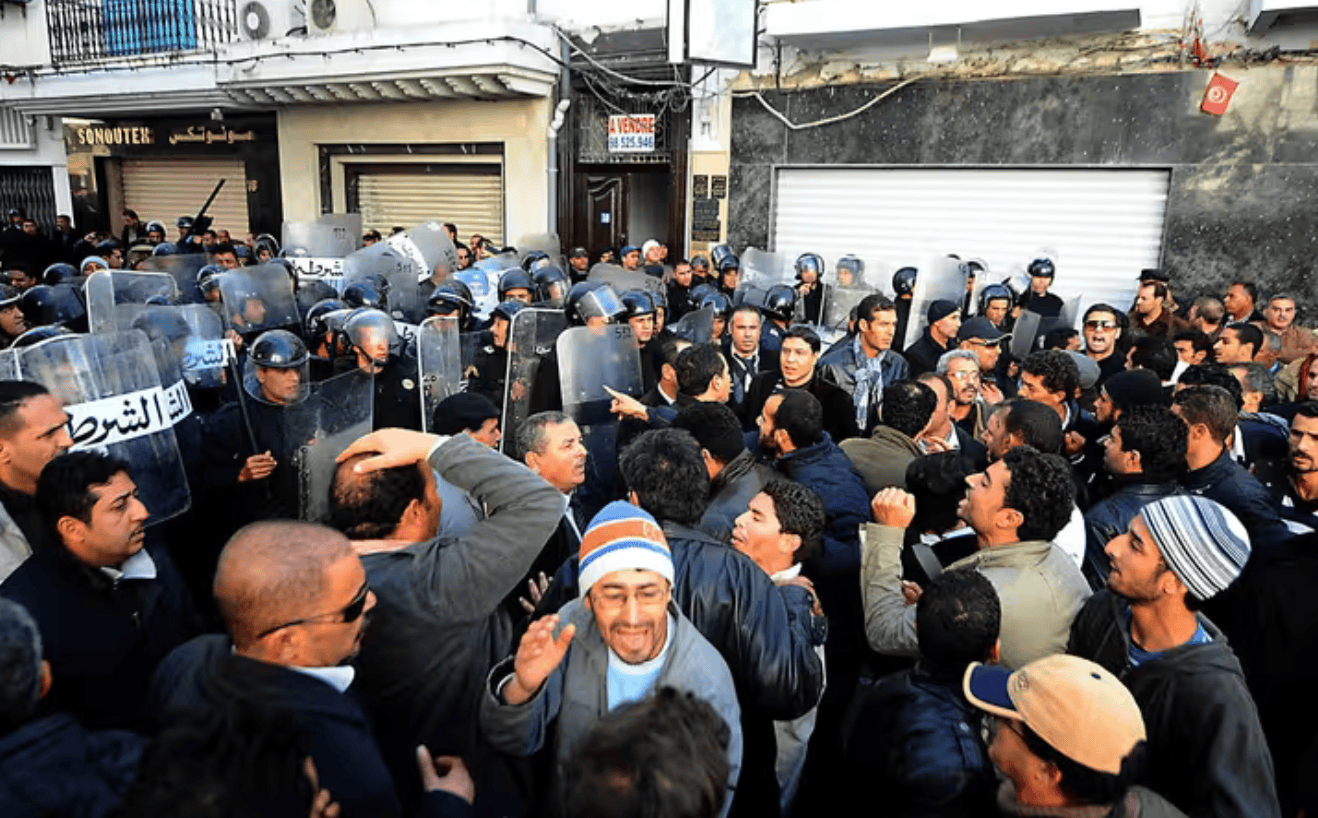
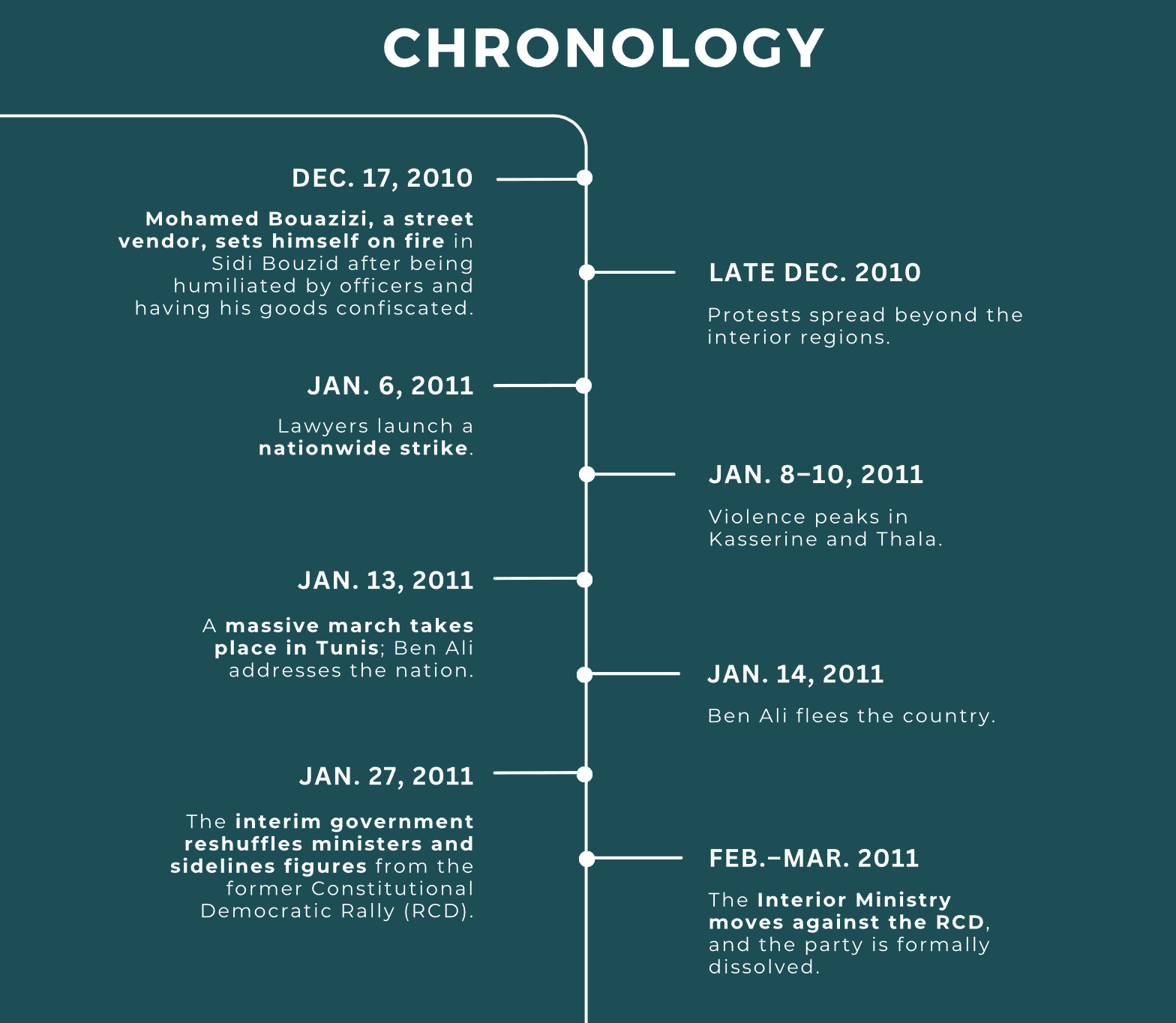
In 2011, Tunisia lived under a tightly locked political system. Corruption and nepotism flourished under Zine el-Abidine Ben Ali, in power since 1987. Economic growth, relatively steady on paper, largely benefited elites connected to the presidential circle. Meanwhile, young people, more and more of them university graduates, faced high unemployment and a lack of economic opportunity, with no real say in the political decisions shaping their future. The spark was the public self-immolation of Mohamed Bouazizi, a young street vendor, outside the governorate headquarters in Sidi Bouzid. His act followed yet another confiscation of his work tools by local police, repeated humiliations, and the contempt he encountered from officials when he tried to file a complaint. His despair resonated across Tunisian society and was followed by mass demonstrations as early as December 2010. (1) Violent repression (live ammunition, rubber bullets, and beatings) killed 147 people, with a further 72 deaths in detention. The uprising nonetheless brought down Ben Ali’s rule: the regime collapsed and he exited the political scene in January 2011. The shockwaves then spread across the region in what became known as the “ Arab Spring. ” (2) This study focuses on the posture of the security forces and their role in the regime’s fall. At the pivotal moment, the security services did not converge on a single line: the army and the police acted according to almost opposite logics, and even within the police, internal fractures were exploited to weaken the regime. The study shows how this lack of unity contributed to Ben Ali’s departure, and it offers recommendations on how opposition movements can further fragment different layers of the security apparatus to facilitate the downfall of an authoritarian regime. 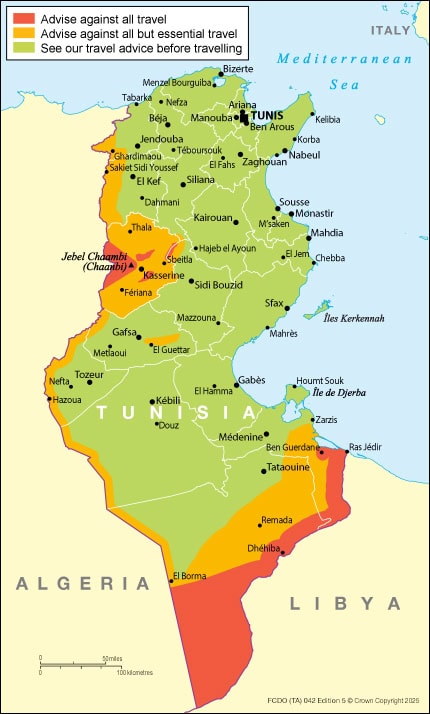
II. THE DYNAMICS OF PROTEST
1. THE UPRISING ESCALATES
In December 2010, Mohamed Bouazizi publicly set himself on fire in Sidi Bouzid after police harassment and an official humiliation, and his act triggered large-scale demonstrations. Between December and January 2011, (3) mass mobilization spread beyond the expected hotspots, including in regions that were traditionally quieter, with young people, women, and entire families taking part. In early January, what had been a local flare-up quickly became a nationwide movement, fueled by social media and word of mouth. On January 2, the cyberactivist collective Anonymous launched “ Operation Tunisia ” to draw global attention to the uprising; then, on January 4, Bouazizi’s death (from his burns) further intensified public anger. (4)
2. REPRESSION PEAKS AND THE MOVEMENT BROADENS
State violence reached a peak in Kasserine and Thala (4), where security forces killed dozens of protesters. Images circulated online and on satellite television shocked the country and widened participation. On January 6, nearly all Tunisian lawyers joined a nationwide strike, denounced the repression, and strengthened demands for social justice and political freedoms. On January 13, outrage, amplified by the spread of images of violence, brought thousands onto Avenue Habib Bourguiba in Tunis. Ben Ali delivered a televised address calling for an end to the use of live ammunition; yet shootings resumed minutes later, a sign that authority was unraveling. On January 14, as key security figures had abandoned him, Ben Ali fled. He first attempted to reach Paris, then found refuge in Saudi Arabia. 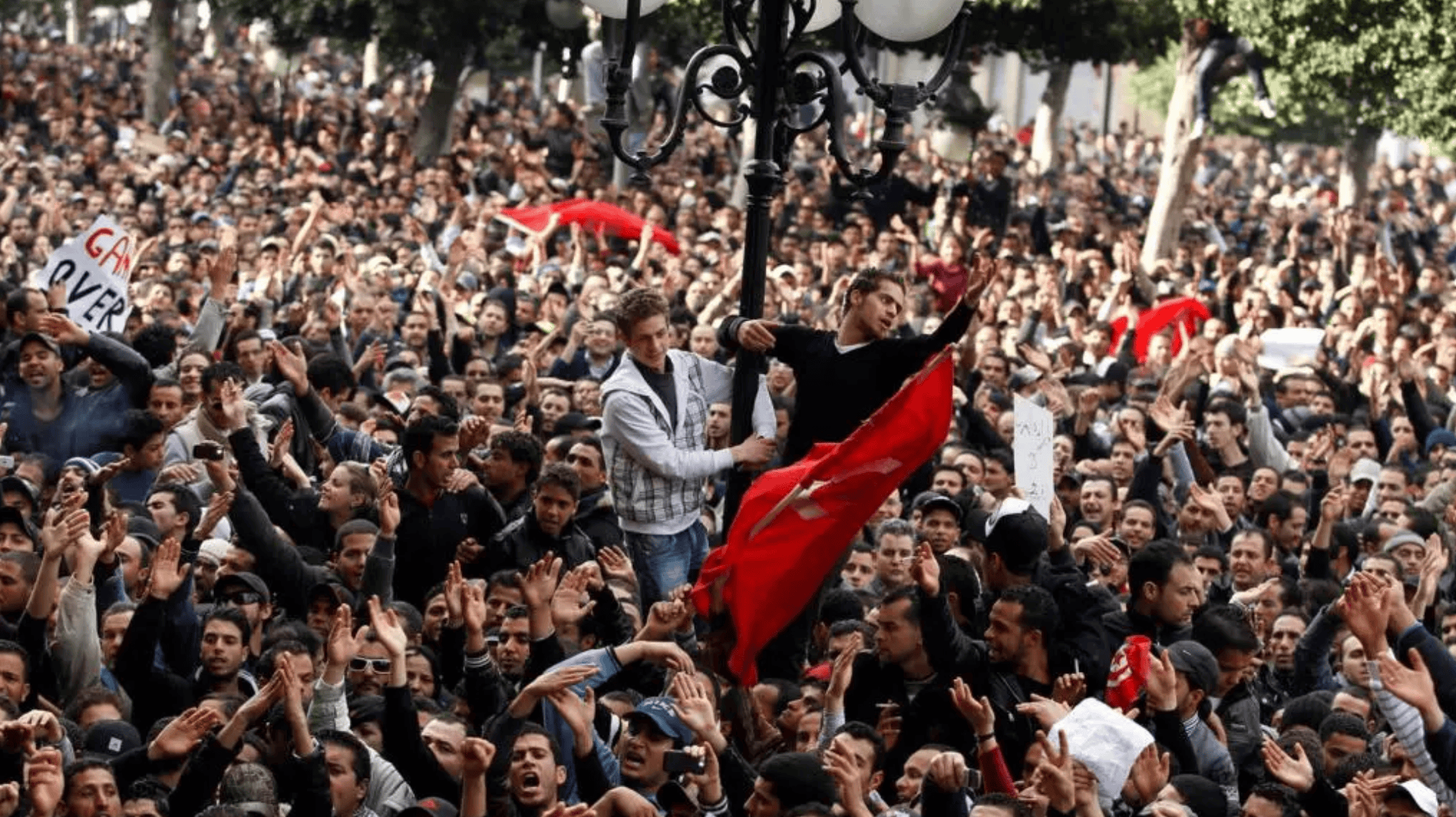
3. INSTITUTIONAL RESHUFFLING AND SUSTAINED PRESSURE
After Ben Ali’s departure, the interim government appointed 12 new ministers on January 27 and removed former members of the ruling party, the RCD (Constitutional Democratic Rally), while keeping Prime Minister Ghannouchi in place. On February 3, Ghannouchi replaced all regional governors. Between February 7 and March 9, the new Interior Minister, Farhat Rajhi, ordered the RCD to cease its activities; the party was then formally dissolved on March 9. Meanwhile, the interim government authorized interim President Fouad Mebazaa to rule by decree and called up army reservists to bolster security after mass desertions within the police. On February 15, the Interior Ministry extended the state of emergency but ended the January curfew. From May to July, rallies took place every Sunday across the country to demand further reforms. (5)
III. SECURITY FORCES RESPONSES
1. THE POLICE AS THE REGIME'S SHIELD, DESPITE EARLY SIGNS OF A SPLIT BETWEEN RANK-AND-FILE AND LEADERSHIP
Before 2011, the police were a central pillar of Ben Ali’s regime through surveillance, control, and repression. Senior officials were often appointed based on political loyalty, family ties, and personal networks linked to Ben Ali or to the family of his wife. During this period, the police functioned as a direct instrument of the Interior Ministry, the backbone of the authoritarian architecture. Upper ranks were closely tied to the ruling party and to the powerful Trabelsi family network. Orders flowed rigidly from the top down, leaving little room for initiative or dissent. For the institution’s elite, directors and senior officers, defending the regime meant defending their privileges, both material and political. That logic did not fully capture the reality of officers on the ground. Many police and non-commissioned officers lived in difficult conditions: low pay, punishing hours, and persistent hostility from parts of the public. Many felt used, sent to the front line to protect a corrupt elite against rising popular anger. As protests spread from Sidi Bouzid to Kasserine and then Tunis, resentment grew. Some officers came to see themselves as expendable, abandoned by their hierarchy, trapped between orders from above and the fury of their fellow citizens. 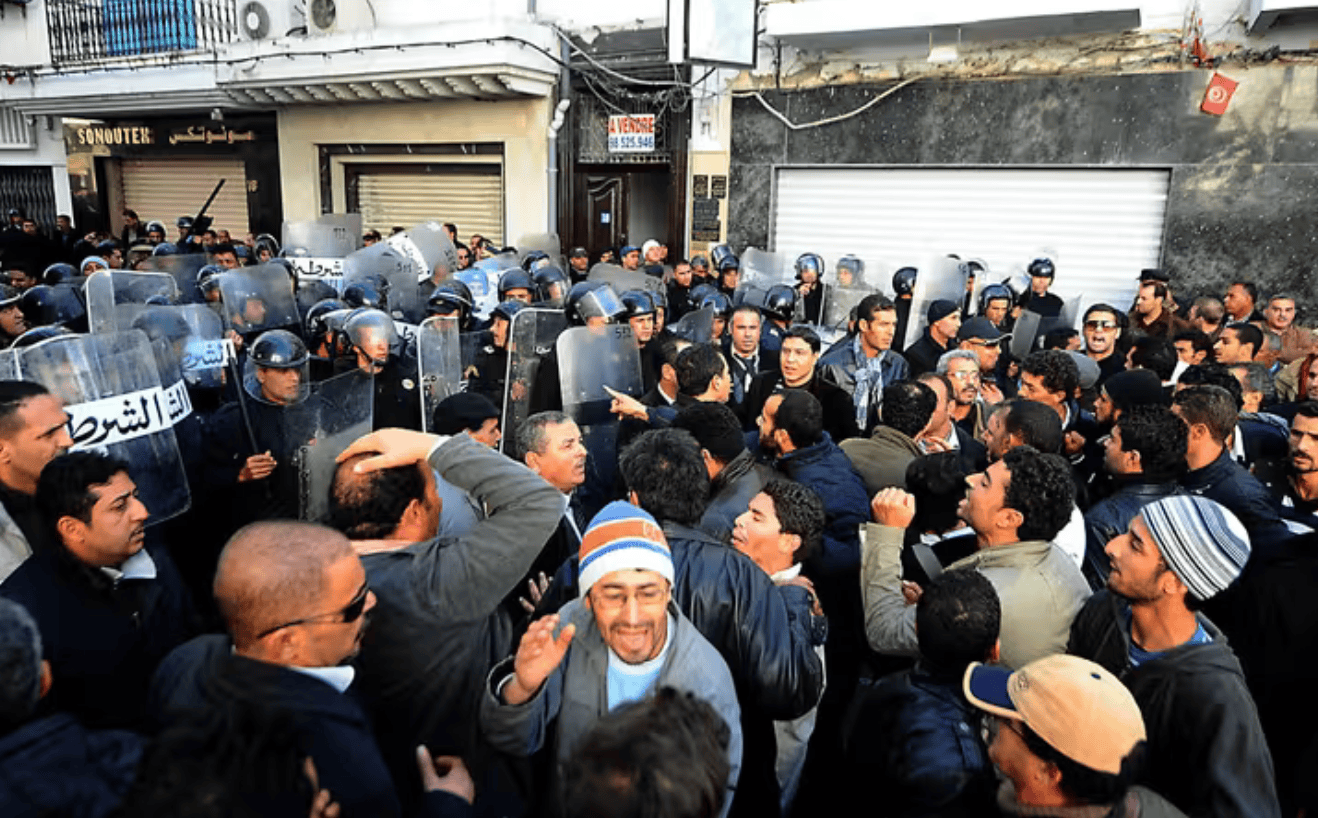
2. SYMBOLIC SIGNIFICANCE
In a handful of rare but politically significant cases, police officers refused to carry out certain orders, notably orders to fire on crowds. Some also passed information about impending movements or repressive operations to the public or to journalists. This resistance was neither coordinated nor widespread. It was spontaneous, localized, and driven by a mix of exhaustion, moral conflict, and a sense of betrayal. Even in isolation, these acts of disobedience signaled a widening crack in the coercive apparatus, a crack that mattered in the regime’s gradual weakening. Though minoritarian, these actions carried real political weight. 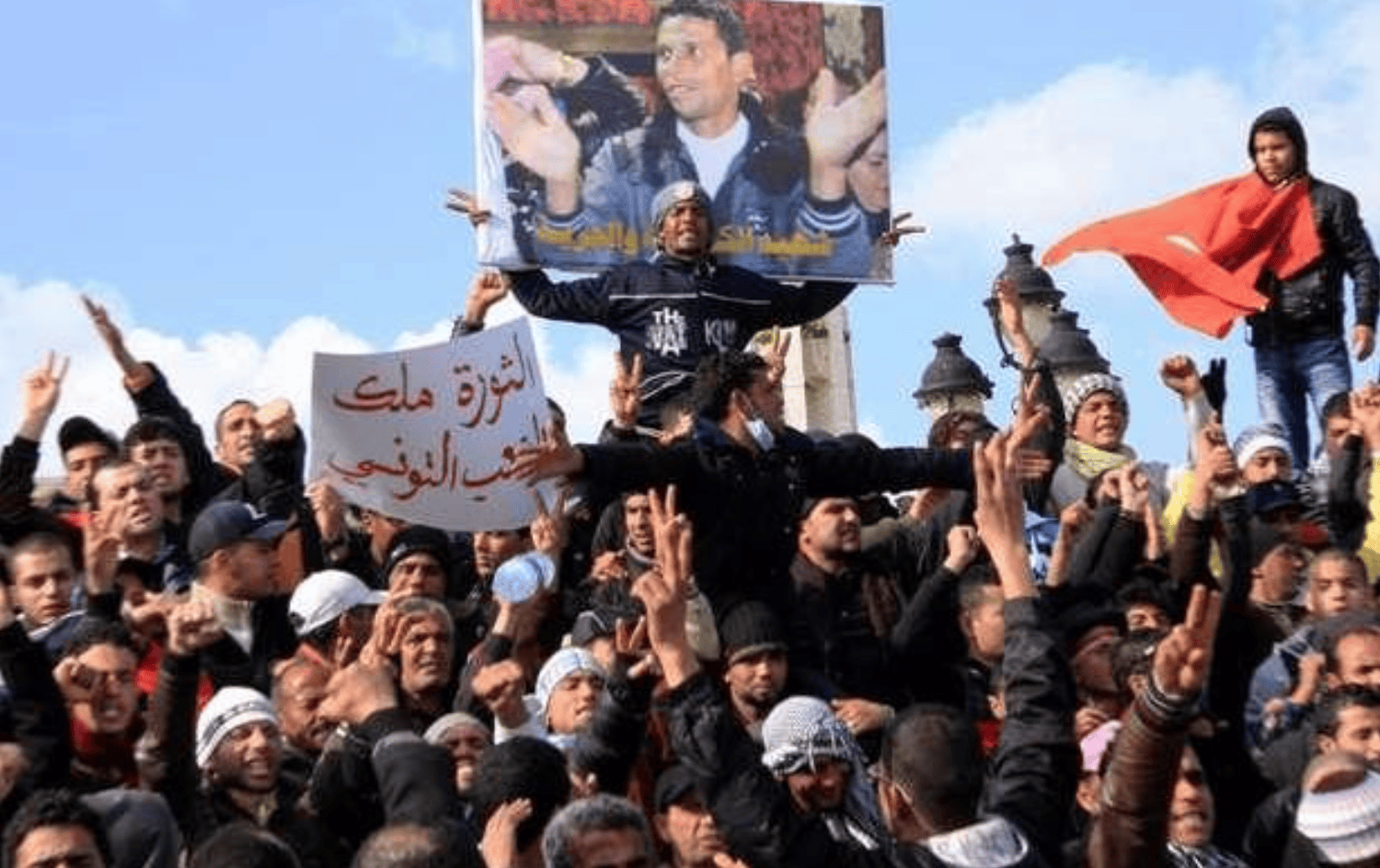
IV. MILITARY NEUTRALITY AND THE REGIME'S COLLAPSE
Researcher Florence Gaub has argued that Arab armies, often assumed to support regimes, were closely watched in 2011 because they were expected to repress protesters harshly. She notes that, except in Syria, armies did not meet that expectation, instead joining protesters or fragmenting. In Tunisia, she argues, the military command’s role proved decisive in the regime change. (6)
1. A POSTURE STRUCTURALLY DIFFERENT FROM THE POLICE
According to the same analyst, under Habib Bourguiba, Tunisia built civil–military relations shaped by European ideas, including a ban on political engagement by officers. A coup attempt in 1962 reinforced Bourguiba’s mistrust of the military and strengthened his determination to keep it out of domestic politics. To that end, he developed multiple police and security services to form the state’s coercive apparatus, in a manner similar to Egypt. The army was sometimes deployed in support, during the 1978 and 1984 bread riots, for instance, but overall it was not seen as the regime’s primary repressive agent. (6) Ben Ali’s late recourse to the army revealed his reluctance to involve the armed forces in an internal crisis. 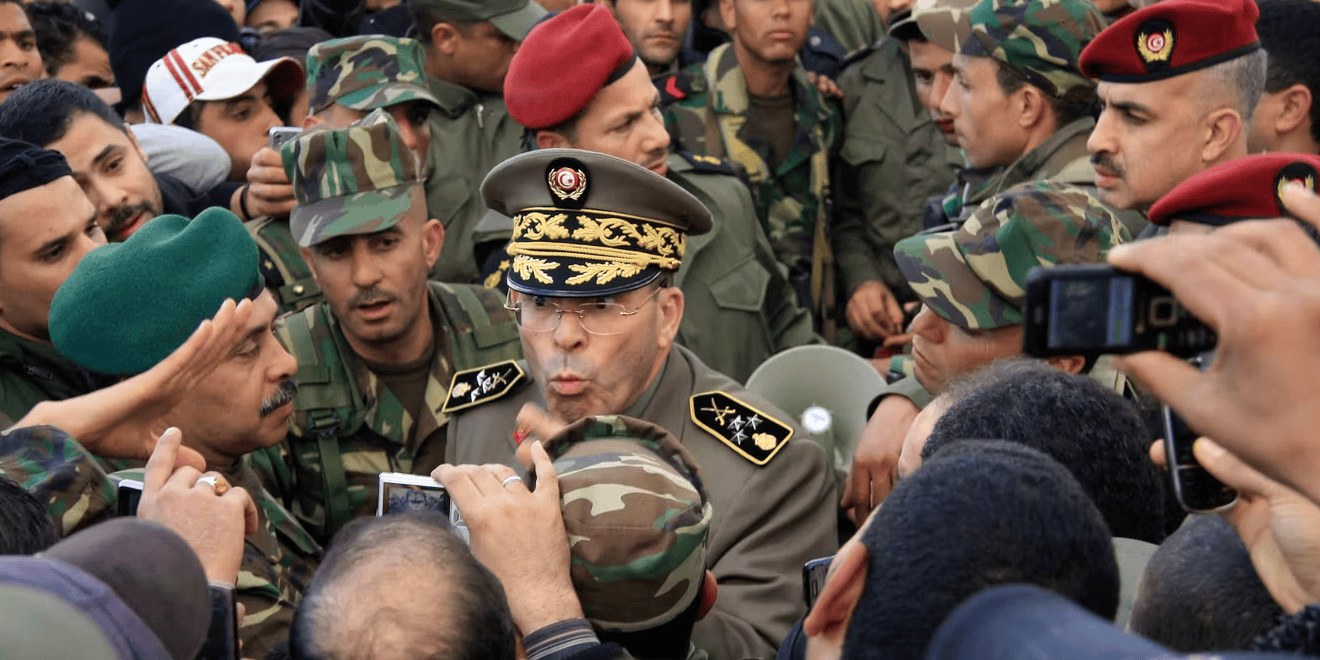
V. COMPARATIVE NOTE: EGYPT IN 2011
In 2011, the Tunisian and Egyptian armed forces, to different degrees, positioned themselves on the side of the street against the regime. In Egypt, Hosni Mubarak’s power relied heavily on the police and internal security forces, while the army, a central institution, was traditionally kept at arm’s length from mass repression. When the uprising began in January 2011, the army declared it would not shoot at protesters. That stance was a turning point: protesters felt protected and the regime’s capacity to crush the movement weakened. The police repressed violently at first, then retreated, most notably on January 28, the “ Friday of Rage ”, and the army filled the security vacuum without carrying out mass repression. After Mubarak resigned on February 11, the Supreme Council of the Armed Forces (SCAF) took control, promised a transition, and at the same time preserved wide autonomy and institutional privileges.
VI. OPERATIONAL LESSONS
A delicate balance is required. The goal is to offer guarantees to defectors or senior officials in order to erode support for a collapsing regime, without striking a “ pact with the devil ” that would prevent limiting the security apparatus’s influence in the new political order. Military or police figures relatively untainted by crimes of the former regime can, under certain conditions, help stabilize a fragile transition, provided they have neither the opportunity nor the capacity to fill the power vacuum. They must be under the effective control of the transitional government and strictly comply with their obligation to remain politically neutral and refrain from public political statements. Opposition movements benefit from welcoming temporary allies to weaken authoritarianism, but they must also anticipate the transition phase to ensure genuine democratic reforms. Amnesty cannot be granted regardless of the severity of crimes; doing so would trample the memory of victims, the recognition of injustice, and the dignity owed to their families.
- Target the security forces
It can be effective to target branches and layers least compromised by the regime, particularly lower-ranking officers, through anonymous or public messages such as “ you are not our enemies ”. Messaging should emphasize their living and working conditions, underscoring that they, too, suffer under the regime. Even if police training is built around obedience, some may refuse on moral grounds. Organized calls, through emerging unions, or through religious and community leaders to disobey unlawful orders can provide collective legitimacy to refusal.
- Humanize the protest
A movement benefits from being portrayed as one of dignified, united, peaceful citizens as much as possible, rather than “ hostile elements ”. This is why it matters to protect and highlight officers who refused violence, and to develop public narratives of “ repentant ” insiders or “ heroes ” who chose not to strike.
- Isolate the hierarchy
Exposing corrupt leaders also helps draw a clear line between a complicit top command and a rank-and-file that remains persuadable. Highlighting the privileges of police chiefs or para-police networks can demoralize the base and encourage defections, especially if paired with credible alternatives: protection, amnesty, or guarantees, depending on the case.
- Build bridges
Where past actions allow it, credible non-retaliation guarantees should be offered to defectors, alongside safe locations or discreet contacts to enable defections. A further step is to identify, among senior officers, figures who are weakly loyal to the regime and show no proven involvement in unlawful violence or corruption schemes, then support the rapid emergence of an alternative police leadership. In parallel, negotiations addressing certain frustrations among lower-ranking officers can strengthen trust between parts of the security forces and a future transitional government.
- After the regime falls
SOURCES
- (1) Carnegie Endowment for International Peace, “ For Arab Youth, Mass Mobilization Won’t Fight Climate Change ” (October 8, 2025).
- (2) United States Department of State, Country Reports on Human Rights Practices: Tunisia (April 19, 2013)
- (3) Wilson Center, Chronology: Tunisia (December 28, 2015).
- (4) Al Jazeera, “ Tunisia: The uprising that started it all ” (December 27, 2011).
- (5) Los Angeles Times, “ A Tunisian state police officer shares harrowing inside view ” (February 3, 2011).
- (6) European Union Institute for Security Studies, “ Arab armies: agents of change? Before and after 2011 ” (Chaillot Paper No. 131) (March 17, 2014).
- (7) Amnesty International, “ Report 2011: The State of the world’s Human Rights ” (May 13, 2011).
Support Fondemos
Every donation helps us continue producing independent analysis.