
Key points
- 01 Christian Mounzeo coordinates three Congolese organisations dedicated to defending human rights, fighting corruption, and promoting civic participation.
- 02 He documents rights violations and denounces the paradox of widespread poverty in a resource-rich country, driven by opacity and corruption.
- 03 For him, democratic alternation remains a mirage until citizens commit to defending their own freedom, because no one else will do it for them.
Promoting, protecting, and defending human rights; monitoring public policies and combating corruption; fighting impunity and supporting civic participation; as well as monitoring human rights in the context of industrial projects.
I coordinate projects and documentation activities. I am also a researcher and trainer, and I lead advocacy efforts within the organisations I am part of.
Through research, documentation, monitoring, early warning/raising the alarm, public denunciation, and citizen mobilisation, as well as through advocacy work, media engagement, and legislative action.
« Citizens are left with one option: to commit to defending their freedom, because no one will do it for them. »
The massacres of innocent, defenceless civilians for political reasons; the impunity enjoyed by perpetrators of these human rights violations; and the paradox of widespread poverty amid abundant natural resources, driven by opacity and corruption.
Because it is citizens' responsibility to fight for their freedom. In an environment where accountability is not the norm, where impunity is entrenched as practice, where justice is held hostage by unaccountable political systems, and where people's participation in decision-making is an illusion, democratic alternation of power becomes a mirage. Citizens are left with one option: to commit to defending their freedom, because no one will do it for them.
Connected young people on social media can make a difference, if their digital security is ensured. Women should play a more prominent role given the sincerity of their engagement. Trained citizens, aware of their rights and duties, are essential, as are local communities and Indigenous peoples in shaping solutions for their own development. In African contexts, religious communities stand out for their religious commitment and their ability to mobilise in support of just causes.
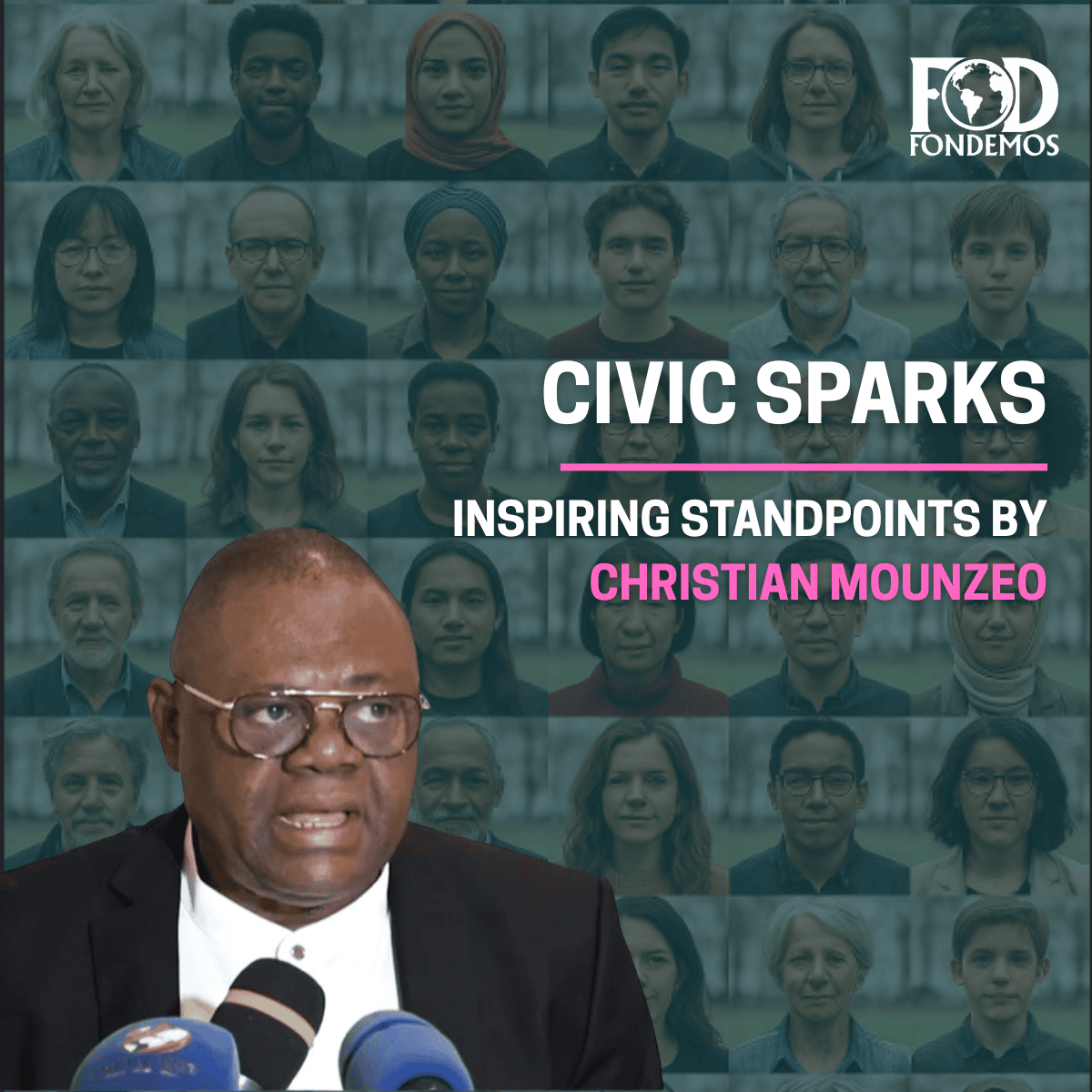
INSPIRING STANDPOINTS BY CHRISTIAN MOUNZEO / Interviewed by Fondemos.
Support Fondemos
Every donation helps us continue supporting democracy's defenders.