
Key points
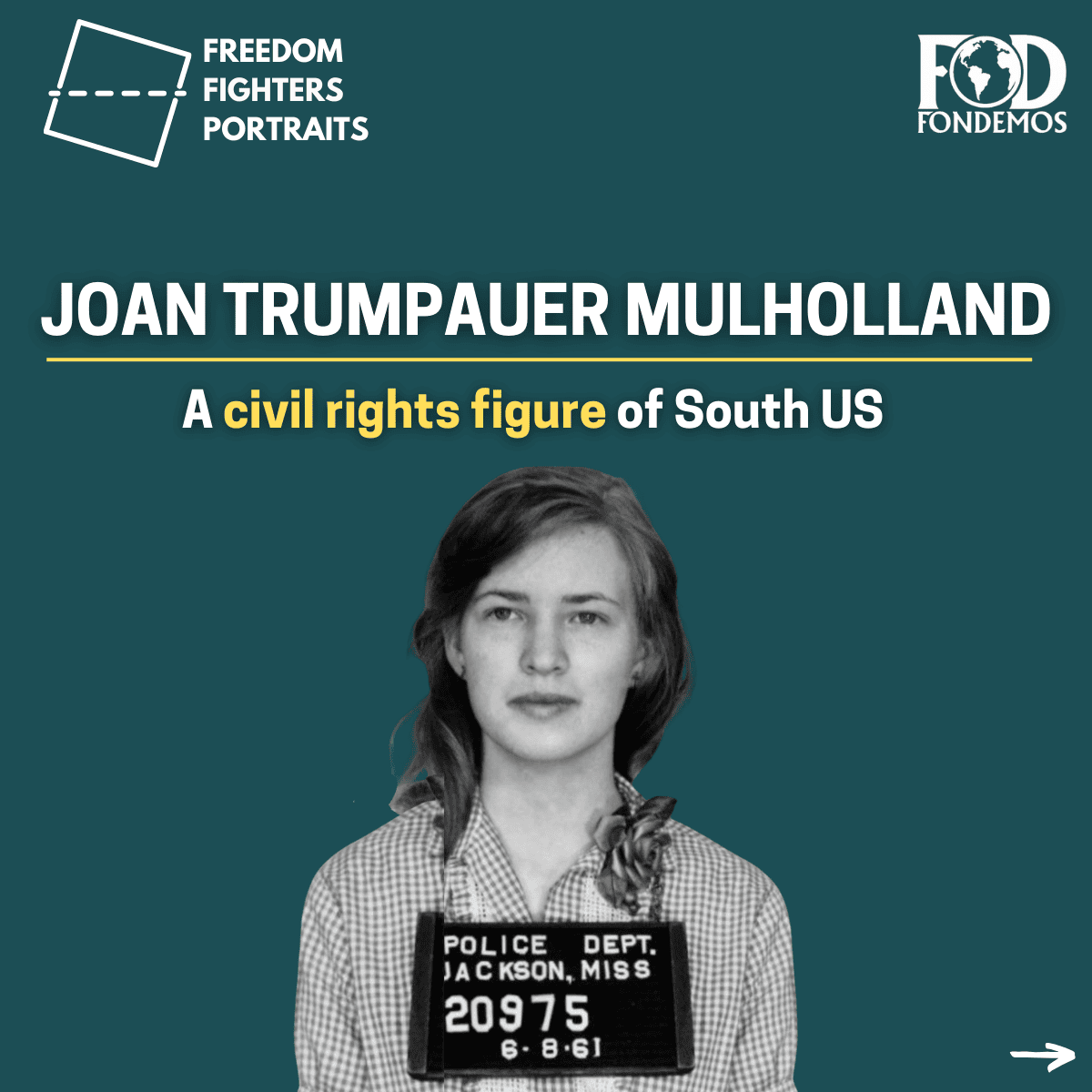
- 01 In 1961, Joan Trumpauer Mulholland joined the Freedom Riders and participated in sit-ins in Mississippi, including at Woolworth's in Jackson, leading to her arrest and imprisonment for nearly two months.
- 02 In 1962, she became the first white student to enrol at Tougaloo College, a historically Black institution, placing herself at the heart of the civil rights movement alongside figures such as Martin Luther King.
- 03 By 1963, she had taken part in more than 50 demonstrations and helped organise the March on Washington, accepting sustained personal risk as a white activist targeted by the Ku Klux Klan.
Early triggers
Joan Trumpauer Mulholland was born in 1941 and grew up in Arlington, Virginia, in a conservative environment, at a time when Jim Crow laws imposed racial segregation in the United States. Her activism began in a religious and academic setting: in the late 1950s, the group she belonged to discreetly organised meals that Black students also attended, despite the risks associated with local laws and the climate of political violence.
Sit-ins and Freedom Riders
At Duke University, she quickly became involved in non-violent actions against segregation, participating in protests targeting businesses that still enforced separate seating. In 1961, she joined the Freedom Riders, activists who travelled across the South by bus to challenge segregation on interstate transport and at railway stations. That same year, she took part in sit-ins in Mississippi (including at Woolworth's in Jackson). The crackdown was immediate: she was arrested along with other activists and imprisoned for nearly two months.
At the heart of the movement
When she enrolled at Tougaloo College (Mississippi) in 1962, Joan became the first white student at this historically Black institution. This choice placed her at the heart of the movement and brought her into a network of activists and leaders, including Martin Luther King and Medgar Evers. In 1963, she helped organise the March on Washington. By this time, she had already participated in more than 50 sit-ins and demonstrations. But this trajectory exposed her to direct danger: family breakdown, assaults and death threats; she was targeted in particular by the Ku Klux Klan.
A life of commitment
Back in Virginia, Joan continued to speak to young people and local organisations. Her career was distinguished by its consistency and the level of risk she had accepted: a white woman engaged in direct action, long identified as a target by supremacists. In 2015, she received official recognition, including the Freedom Award from the National Civil Rights Museum, and remains today a leading voice on the methods and experience of the civil rights movement.
« Don't wait for change, be the change. »
Support Fondemos
Every donation helps us continue supporting democracy's defenders.