
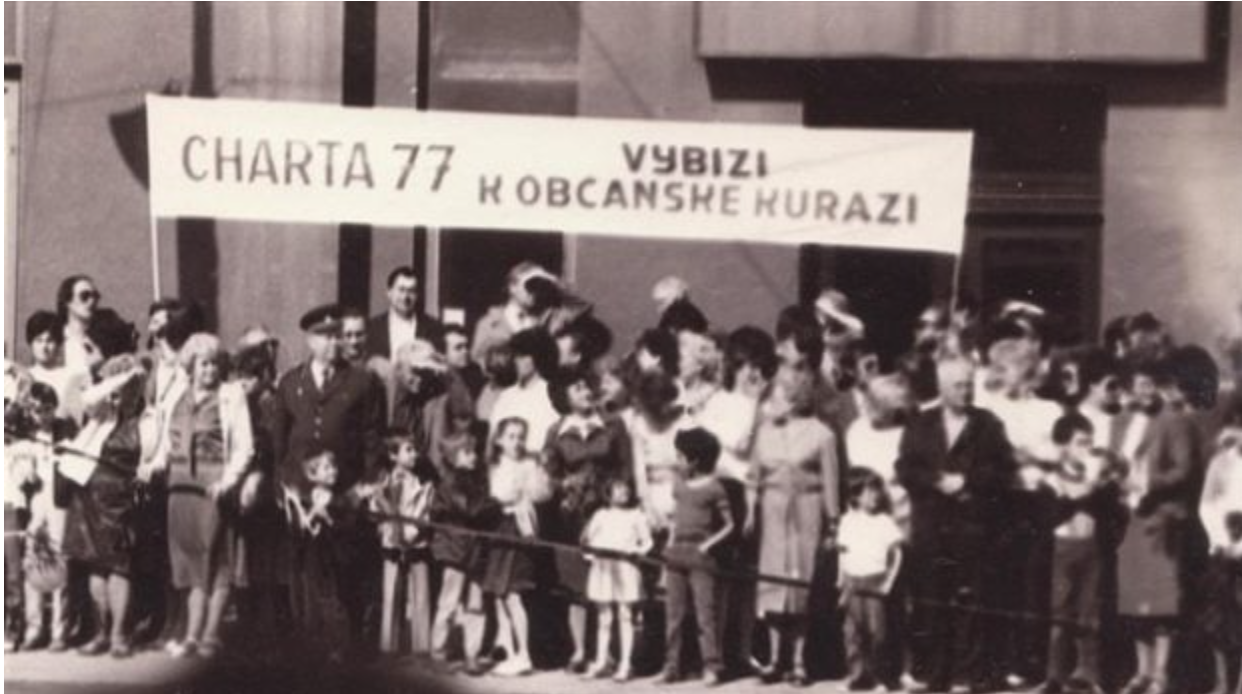
CHARTE 77 IN CZECHOSLOVAKIA
In communist Czechoslovakia, dissidents drafted a manifesto known as Charter 77. This human rights movement aimed to pressure the communist authorities into complying with existing laws.
The signatories drew upon the United Nations Universal Declaration of Human Rights and the 1975 Helsinki Accords, which the regime had signed. The regime could not ignore this collective text without revealing its contradictions.
TURNING THE REGIME'S PROMISES AGAINST IT
Charter 77 emerged from a group that had formed in opposition to the legal proceedings against the Plastic People music group: its members called on Gustáv Husák's regime to honour the democratic commitments of the Final Act of the Helsinki Process.
On 1 January 1977, 242 intellectuals and workers signed the charter. The police immediately arrested the organisers and in October 1979, 10 signatories of the Charter, including writer Václav Havel, were accused of attempted subversion and sentenced to prison terms.
EXPOSING THE REGIME'S CONTRADICTIONS
The Charter, whose contents were revealed in the European press but not in Czechoslovakia, signalled the emergence of a new form of opposition that challenged the communist regime in the name of the legal standards it had itself accepted.
The repression that followed confirmed the accusations of the manifesto. Jan Patočka, philosopher and spokesperson for the Charter, died during interrogation. Over the next twelve years, political legitimacy eroded.
Critical assessment
Strengths
- 01 Creates a permanent written record, impossible to suppress.
- 02 Collectively brings together actors from different worlds.
- 03 Forces public debate, exposes the regime internationally.
Limits
- 01 Immediate and severe repression against all signatories.
- 02 Remains limited to urban and intellectual circles.
- 03 Alone, it does not overthrow the regime without external support.
Key Takeaways
- 01 Through Charter 77, the signatories are not inventing new rules; they are simply demanding that the regime abide by the ones it has itself signed.
- 02 By bringing together intellectuals and workers around a single manifesto, Charter 77 sparked public debate and exposed the regime to international scrutiny.
- 03 By arresting and convicting those who demanded respect for the law, the regime unwittingly confirms what the Charter denounced.
Support Fondemos
Every donation helps us continue supporting democracy's defenders.