
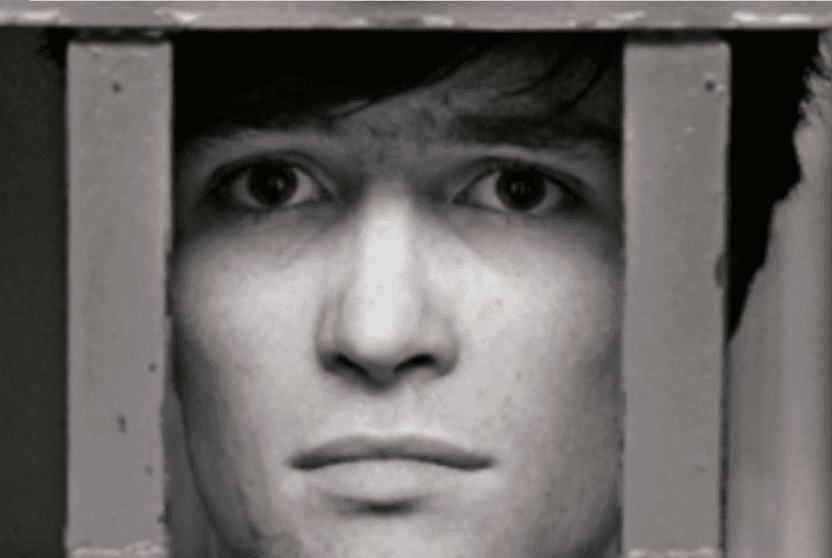
Is the use of force legitimate in the struggle for political rights? Is it strategically effective? If pacifism is in fact merely an inability to resort to force, then it is not a moral stance but a simple acknowledgement of powerlessness. Oppression will not treat in the same way a movement that is non-violent by choice and a movement that is non-violent by incapacity.
Gandhi’s struggle for independence was arguably all the more effective because it existed alongside a credible violent and threatening alternative, embodied by revolutionary socialist figures such as Bhagat Singh. That revolutionary violence, even if marginal, altered the British colonial authorities’ calculus: rights are rarely granted as the result of a moral conversion; they are granted when the status quo becomes too dangerous. Would Paris have returned Algeria to Algerians without armed resistance? Commitment has a cost, that of confrontation, without which the order of things can scarcely be changed.
Yet considering the use of force does not preclude continual questioning of the legitimacy and effectiveness of our actions. If ethical reflection leads to inaction, it is no longer prudence but cowardice. And if only those unafraid of doing wrong were to act, the world would not be any better. We must therefore reckon both with Hoederer (Dirty Hands, Sartre), ” purity is an idea for fakirs and monks. You intellectuals, you bourgeois anarchists, you use it as an excuse for doing nothing ”, and with Kaliayev (The Just Assassins, Camus), who refuses to throw a bomb into the Grand Duke’s carriage when he sees him accompanied by children: “I will not add to living injustice for a dead justice. And if, one day, the revolution, while I am alive, were to separate itself from honour, I would turn away from it.”
We believe that the use of force to secure legitimate political rights is not one means among others, but a last resort, when all other levers of action have proved insufficient. Showing the other cheek in the face of a regime that places no value on the lives of its opponents might be imaginable in a world order where effective justice prevails, and where the international community acts beyond diplomatic declarations of convenience. Yet the siege of Sarajevo, the genocide in Rwanda, and the bloody, disproportionate repression unfolding even now in Iran, among others, show that civilians cannot generally rely on such a miracle.
When a regime refuses national dialogue, when external actors remain immobile or intervene only according to their own geopolitical calculations, a repressed democratic opposition has no choice but to assert itself in the balance of power. We believe that recourse to force in pursuit of political and human rights is legitimate if, and only if, all of the following conditions are met:
- Last resort: everything else has been tried; nothing allows the people to participate fairly in the decision-making process that affects them, or to secure respect for their legitimate rights. The regime’s response amounts to intransigence and a refusal of dialogue.
- Just cause: violence is not used to impose a particular political or religious opinion, but to enable respect for human rights and the free, non-discriminatory, and verifiable participation of all in the decisions that concern them.
- Proportionality: the use of force must be proportionate to the outcome sought, weighing consequences with rigour. Returning to Kaliayev: no just end can arise from unjust means. Nothing can ever justify terrorism, understood as the use of violence against civilians to exert pressure on a government or a population.
- Prospect of success: recourse to violence in pursuit of legitimate political rights must not stem from a spirit of vengeance or a last stand. The consequences are too grave, for women and men affected, sometimes in their very flesh, whatever their side. Timing, planning, and a genuine likelihood of success, combined with a proportionate use of violence, are essential to legitimacy.
Strict adherence to these conditions is first and foremost an ethical requirement, but it also answers a strategic imperative. Each act of repression by the regime must carry a high political cost for it internationally. The illegitimate and disproportionate use of violence by a civic movement, outside the framework defined above, risks isolating it from a broad popular base and granting the repressive forces a licence to respond with even more unrestrained violence. Success, by contrast, depends on the movement’s capacity to unite as widely as possible, among its fellow citizens and beyond its borders. It must make the legitimacy of its struggle, and the means it employs, incontestable.
Support Fondemos
Every donation helps us continue supporting democracy's defenders.