
Leave or stay.
Exile or the kingdom.
Risk prison or death, or flee far from one’s country and comrades in the struggle.
In the fight for democratisation, a good leader is a living leader, one who commands his time, his movements, his words and his pen: free to act against the authoritarian regime he is fighting.
Hence, sometimes, the temptation of exile, to avoid ending up in prison like Succès Masra, locked up in N’Djamena in the jails of the ruling junta, for a year now.
He suffers, his family suffers, his movement, Les Transformateurs, suffers.
Should he have left?
But then we return to the risk of being cut off from one’s troops and the struggle, of no longer being in a position to organise and above all to galvanise. Worse, of being wrongly seen as a deserter, one of the “diaspora shirkers”.
It is easy to judge, less easy to decide; as is often the case, it is a decision made on a case-by-case basis, depending on local context, without certainty, and obviously in the final instance by the person concerned, the only one whose freedom and life are at stake.
For Chris Manengs, former campaign director for Cameroonian politician Issa Tchiroma Bakary, “in certain configurations, imprisonment can strengthen a political dynamic, whereas exile can weaken it. An imprisoned leader remains physically inscribed in the national political struggle. He becomes a crystallisation point for his supporters and for public opinion. World political history shows that detention can transform a political actor into a symbol.”
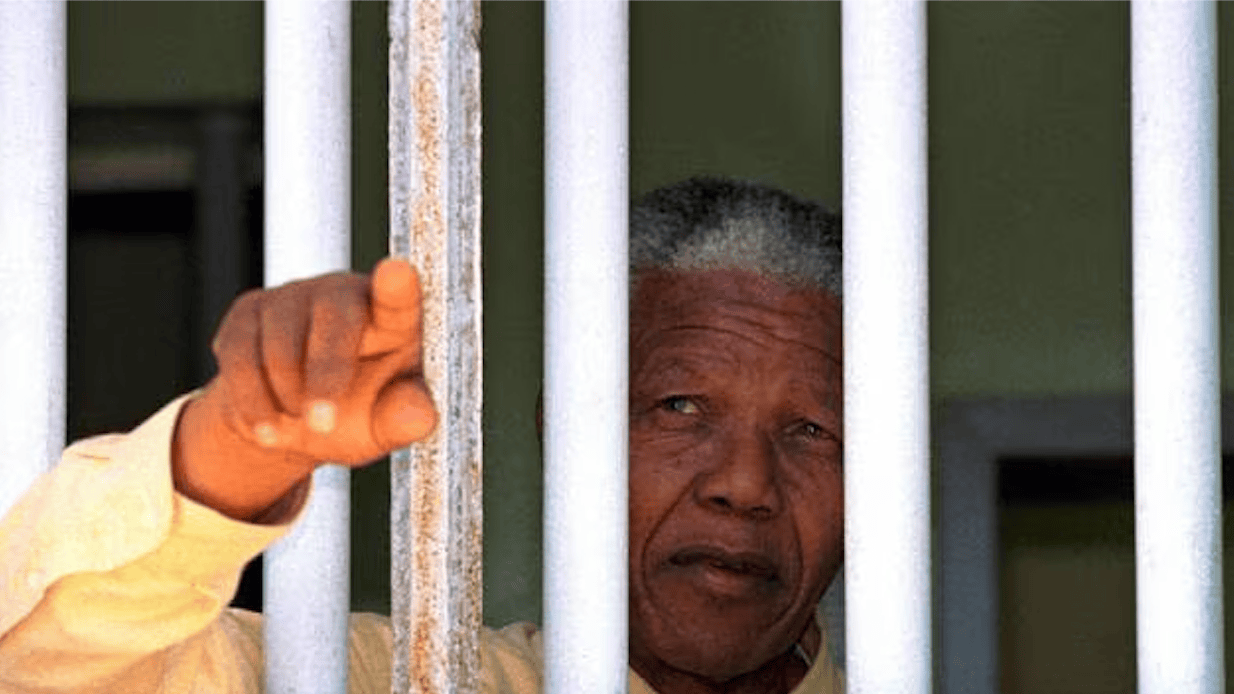
Granted, a period in prison can be an original ordeal, one that forms and forges, that confers added legitimacy… but Mandela spent nearly three decades on Robben Island, and Lumumba was assassinated: would they have made the same choice, to remain in their country, had they known?
A partial solution may lie, when circumstances demand it, in a nearby exile, that is to say in a neighbouring country rather than a distant European capital, having first organised relays within the country: a first circle, a vanguard of lieutenants, who must themselves take all necessary security precautions.
This is a dilemma recently faced by Uganda’s Bobi Wine and Cameroon’s Issa Tchiroma Bakary.
Despite the flight abroad of its leader in March 2026, the spokesman of Bobi Wine’s movement (the National Unity Platform), Joel Ssenyonyi, insists that the opposition continues to function: “the advantage is that, over time, we have put in place structures and systems. So even when he is absent, the party continues to function, the work goes on.”
In contrast, Chris Manengs is severe with Issa Tchiroma Bakary, who fled to Gambia following the violence in the wake of the highly disputed presidential elections of October 2025: “leaving the country at the moment when the battle for legitimacy was being decided had an immediate strategic consequence: leaving the system in place the ability to define the narrative and the balance of power on its own. (…) The physical presence of the leader is essential, as it structures mobilisation, reassures supporters and prevents the adversary from totally controlling the political terrain. It is for this reason that I write that this exile was strategically devastating.”
“Freedom is not free”: it was not yesterday that Colonel Walter Hitchcock reminded us that the freedom enjoyed by many is the result of risks taken by a few.
Support Fondemos
Every donation helps us continue supporting democracy's defenders.